
TL;DR:
- Safe trauma-informed therapy builds trust, emphasizes safety, and addresses the nervous system’s response.
- When seeking therapy, verify credentials, trauma training, safety protocols, and prioritize your feelings of safety.
- Your active participation and instincts are essential; advocate for your needs to find the right supportive therapist.
Finding safe, trustworthy therapy when you’re carrying the weight of trauma, anxiety, or a painful life transition is one of the hardest things to do. It’s not just about finding someone with a license on their wall. It’s about finding someone who truly understands how trauma lives in the body, shapes your nervous system, and colors every relationship you have. For adults in Kansas City seeking that kind of support, the search can feel overwhelming. This guide will walk you through each step, so you can move forward with clarity, confidence, and the assurance that your healing is in safe hands.
Table of Contents
- Understanding the basics of safe therapy
- Preparing to start your search: What you need and where to look
- How to evaluate therapist credentials and safety protocols
- Making your first contact and protecting your privacy
- A fresh perspective: Why patient-driven safety matters most
- Next steps: Personalized trauma-informed help in Kansas City
- Frequently asked questions
Key Takeaways
| Point | Details |
|---|---|
| Prioritize trauma-informed care | Choosing therapists trained in trauma-focused approaches increases safety and healing potential. |
| Verify credentials and protocols | Always check for licensing, ongoing supervision, and clear privacy policies before starting therapy. |
| Gather trusted resources | Use reliable Kansas City directories, clinics, and referrals to begin your search for therapy support. |
| Ask questions and set boundaries | Empower yourself in the search process by clarifying your needs, verifying practices, and protecting your privacy. |
Understanding the basics of safe therapy
Before you start searching, it helps to understand what “safe therapy” actually means. Safe therapy is not simply a comfortable conversation. It’s a therapeutic relationship built on trust, professional ethics, and a genuine understanding of how trauma works.
Trauma-informed therapy, as a standard of care, means your therapist prioritizes safety and empowerment in every session. It means they understand that your nervous system has been shaped by experiences that may have left you hypervigilant, disconnected, or struggling to trust others, including a therapist.
Here are the core qualities to look for when evaluating whether a therapist can offer you a safe space for healing:
- Licensed and credentialed: They hold a valid state license (LCSW, LPC, LMFT, or similar) and are in good standing.
- Trauma-specialized training: They have specific education in trauma modalities, not just general counseling.
- Empathy and attunement: They listen without judgment and respond to what you’re actually expressing.
- Confidentiality: They explain their privacy policies clearly before your first session.
- Empowerment focus: Their goal is to return you to a sense of self, not create dependency.
- Cultural sensitivity: They respect your background and identity without assumption.
Here’s a quick reference for what separates trauma-informed therapy from standard talk therapy:
| Feature | Standard therapy | Trauma-informed therapy |
|---|---|---|
| Focus | Thoughts and behaviors | Nervous system, body, and safety |
| Approach | Problem-solving | Empowerment and regulation |
| Session pacing | Structured agenda | Flexible, client-led |
| Modalities used | CBT, talk therapy | EMDR, IFS, somatic therapy |
| View of symptoms | Deficits to fix | Adaptive responses to pain |
Therapy options in Kansas City vary widely, so knowing this difference helps you ask the right questions from the start.
Pro Tip: Prioritize therapists who have completed formal training in EMDR, Internal Family Systems (IFS), or somatic therapy. These modalities are specifically designed to address trauma held in the body, not just the mind.
Preparing to start your search: What you need and where to look
Understanding what safe therapy looks like is key. Next, prepare yourself with tools and resources that will make your search both easier and safer.
Start by getting honest with yourself about your needs. What are you carrying right now? Grief, anxiety, complex trauma, attachment wounds, or a significant life change? Naming your needs gives your search direction and helps you avoid wasting time with providers who aren’t a right fit.

Here’s a comparison of the most common ways to find a therapist:
| Search method | Pros | Cons |
|---|---|---|
| Online directories (Psychology Today, etc.) | Wide selection, filter by specialty | Listings are self-reported, not verified |
| Local clinics and practices | Established protocols, team accountability | May have waitlists |
| Healthcare professional referrals | Vetted and trusted | Limited to their network |
| Community recommendations | Personal trust built in | May not match your specific needs |
Local resources can guide you toward credible therapy that matches your specific situation, especially when you’re looking for trauma-specialized care.
Here’s a step-by-step process to guide your search:
- Write down your goals. What do you want to feel differently about in six months?
- List your must-haves. Trauma training, a specific modality, gender preference, telehealth options.
- Search using specific terms. Try “trauma-informed therapist Kansas City” or “EMDR therapist near me.”
- Review therapist profiles carefully. Look at their specialties, approach, and listed training.
- Shortlist two or three options. Don’t stop at the first name you find.
- Schedule consultations. Most therapists offer a brief intro call before committing.
Therapists like Kieri Olmstead and Taylor Esworthy are examples of Kansas City clinicians whose profiles detail their specific trauma training and approach, which is exactly what you want to see before making contact.
A word of caution: Online reviews can feel reassuring, but they don’t tell the full story. A high star rating doesn’t confirm trauma competency. Always go deeper than the review section.
How to evaluate therapist credentials and safety protocols
Once you’ve started your search, you’ll need to carefully assess therapist credentials and their commitment to safety.
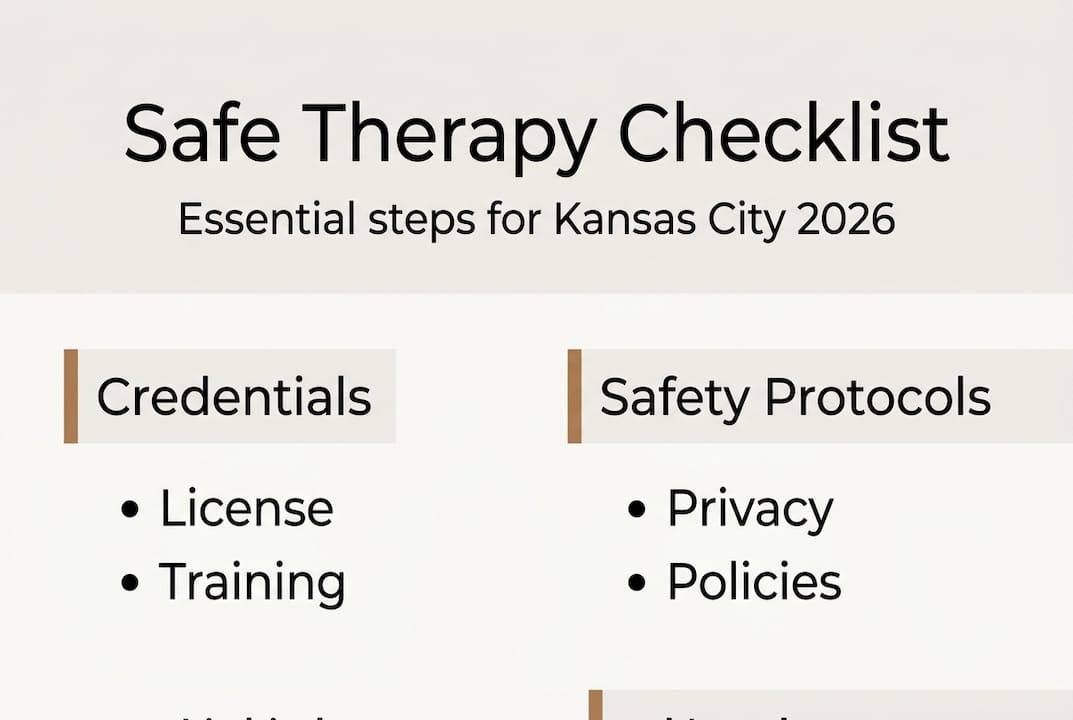
Verifying credentials doesn’t have to feel clinical or confrontational. You have every right to ask. A therapist who is genuinely safe will welcome your questions with warmth.
Here’s what to look for and ask:
- License verification: You can look up Kansas City therapists on the Missouri Division of Professional Registration website.
- Trauma-specific training: Ask directly what modalities they’re trained in and whether they’ve received formal certification.
- Years of experience with trauma: General experience isn’t enough. Ask about their specific work with trauma, anxiety, and attachment wounds.
- Ongoing education: Safe therapists continue learning. Ask when they last completed professional development in trauma care.
- Consultation and supervision: Clinical supervision enhances patient safety and accountability, meaning a therapist who is supervised or who supervises others brings an added layer of ethical accountability to your care.
Presence in therapy is also critical for safety in trauma recovery. It’s not just about technique. It’s about the felt sense that your therapist is truly with you, regulated, attuned, and not projecting their own experience onto yours.
Therapists like Kosta Kostoryz demonstrate what this kind of present, credentialed, trauma-informed care can look like in practice.
Pro Tip: Ask every prospective therapist, “What does safety look like in your sessions?” The quality and specificity of their answer will tell you more than their bio ever could.
Statistic to know: Studies consistently show that the therapeutic relationship itself, more than any specific technique, predicts positive outcomes in trauma therapy. Feeling safe with your therapist is not optional. It’s the foundation everything else is built on.
Making your first contact and protecting your privacy
After confirming a therapist’s credentials and safety policies, your next step is to make contact and protect your privacy.
Your first phone call or email to a therapist sets the tone for everything that follows. It’s okay to be direct. You’re not imposing. You’re doing exactly what you should be doing.
Here’s a step-by-step guide to your first contact:
- Introduce yourself briefly. You don’t need to share your full story yet. A sentence or two about what brings you to therapy is enough.
- Ask about their experience with your specific concern. Whether it’s complex trauma, anxiety, or attachment wounds, ask if they’ve worked with this before.
- Request their confidentiality policy in writing. A safe therapist will provide this without hesitation.
- Ask about telehealth options. Privacy can be easier to manage at home than in a public building.
- Notice how you feel after the call. Did you feel heard? Rushed? Dismissed? Your body knows.
Confidentiality is a core therapeutic value and protecting your information is not just ethical practice, it’s a legal requirement under HIPAA. If a therapist is vague about their privacy practices, that’s a red flag.
Always request a written confidentiality policy before your first session. This protects you and signals that your therapist takes their ethical obligations seriously.
Your nervous system picks up on safety cues even before your mind does. If something feels off after a first conversation, trust that. Healing requires a relationship built on genuine trust, and that starts from the very first interaction.
A fresh perspective: Why patient-driven safety matters most
Here’s something that doesn’t get said enough: you are not a passive recipient of therapy. You are an active participant in your own healing. And that means your sense of safety matters more than any credential or modality list.
Many people walk into therapy believing it’s their job to simply show up and be fixed. But the most effective trauma recovery happens when you feel empowered to ask questions, name your needs, and say out loud when something isn’t working. That’s not being difficult. That’s being your own advocate.
Discomfort in the early stages of therapy is normal. But chronic discomfort, the kind where you dread sessions or feel judged, is a signal worth listening to. Safe therapy is a partnership, not a hierarchy.
When you’re exploring therapy options in Kansas City, carry this with you: your instincts are data. Your preferences matter. And finding a therapist who makes you feel like you belong in the room is not asking too much. It’s the bare minimum you deserve.
Next steps: Personalized trauma-informed help in Kansas City
You’ve done the reading. You understand what safe, trauma-informed therapy looks like, how to search for it, how to evaluate it, and how to protect yourself throughout the process. Now it’s time to take one concrete step forward.

At Simple Empathy KC, we specialize in exactly this kind of care. Our team offers evidence-based, deeply personalized support for adults navigating trauma, anxiety, attachment wounds, and life transitions. If you’re looking for a personalized trauma recovery guide or want to explore top trauma healing tips grounded in real clinical experience, we have resources ready for you. And when you’re ready to connect with a therapist, our therapy services are here to meet you exactly where you are.
Frequently asked questions
What should I look for in a trauma-informed therapist?
Prioritize licensed therapists with specialized trauma training, clear safety protocols, and a focus on empowerment and confidentiality. A trauma-informed approach means your therapist prioritizes safety and empowerment at every stage of your healing.
Where can I find therapy services in Kansas City?
Start with trusted local clinics, online directories, and referrals from healthcare professionals. Local resources can guide you toward credible, trauma-specialized care that fits your specific needs.
How do therapists protect my privacy?
Safe therapists provide written confidentiality policies and follow strict ethical and legal guidelines. Protecting your information is a core therapeutic value and non-negotiable standard of ethical practice.
What if I don’t feel comfortable with my therapist?
Trust your instincts and seek another provider without guilt. Presence and attunement are critical to trauma recovery, and your comfort is not a luxury.
How can I verify a therapist’s credentials?
Ask directly for their license number, supervision arrangements, and trauma-informed training history. Therapists who maintain clinical supervision should be able to provide proof of accountability without hesitation.