
TL;DR:
- Compassion in therapy actively recognizes suffering and offers warmth without judgment.
- Evidence shows compassion-focused therapy reduces shame and builds emotional resilience.
- For complex trauma, compassion helps restore self-identity and improve relational healing.
Compassion might sound like a soft word. But when it comes to trauma therapy, it may be the most powerful force in the room. Many adults in Kansas City come to therapy feeling buried under shame, self-doubt, and the weight of experiences that were never truly witnessed. Research confirms that self-compassion moderates post-traumatic symptoms and post-traumatic growth, acting as a meaningful protective factor on the road to healing. This guide explores what compassion really means in a therapy setting, what science says about why it works, and how you can begin putting it into practice, whether you are just starting out or have been searching for something that finally feels right.
Table of Contents
- What is compassion in trauma therapy?
- The science behind compassion: Evidence-based approaches
- The special role of compassion for complex trauma, anxiety, and loss
- How to integrate compassion into your trauma recovery journey
- The overlooked power of compassion in trauma healing
- Connect with compassionate trauma therapy in Kansas City
- Frequently asked questions
Key Takeaways
| Point | Details |
|---|---|
| Compassion fosters healing | Compassion-focused approaches reduce shame and self-criticism, making it easier to recover from trauma. |
| Backed by science | Studies show compassion-based therapies lead to better emotional, relational, and mental health outcomes for adults with trauma. |
| Local relevance | Kansas City adults facing complex trauma benefit from gentle, client-centered therapy that prioritizes compassion. |
| Practical application | You can build self-compassion through simple, daily exercises and by seeking therapists who embrace compassion in their practice. |
What is compassion in trauma therapy?
Compassion is not the same as sympathy. Sympathy looks at pain from the outside. Empathy steps inside the feeling. Compassion goes one step further: it recognizes suffering and moves toward it with the genuine desire to help relieve it. In trauma therapy, that distinction matters enormously.
When you have been through trauma, especially the kind that happened repeatedly or in your closest relationships, your nervous system learns to brace. It expects judgment. It anticipates being too much, too broken, or too damaged to deserve real care. Compassion, in a therapeutic sense, is the steady, warm presence that interrupts that pattern.
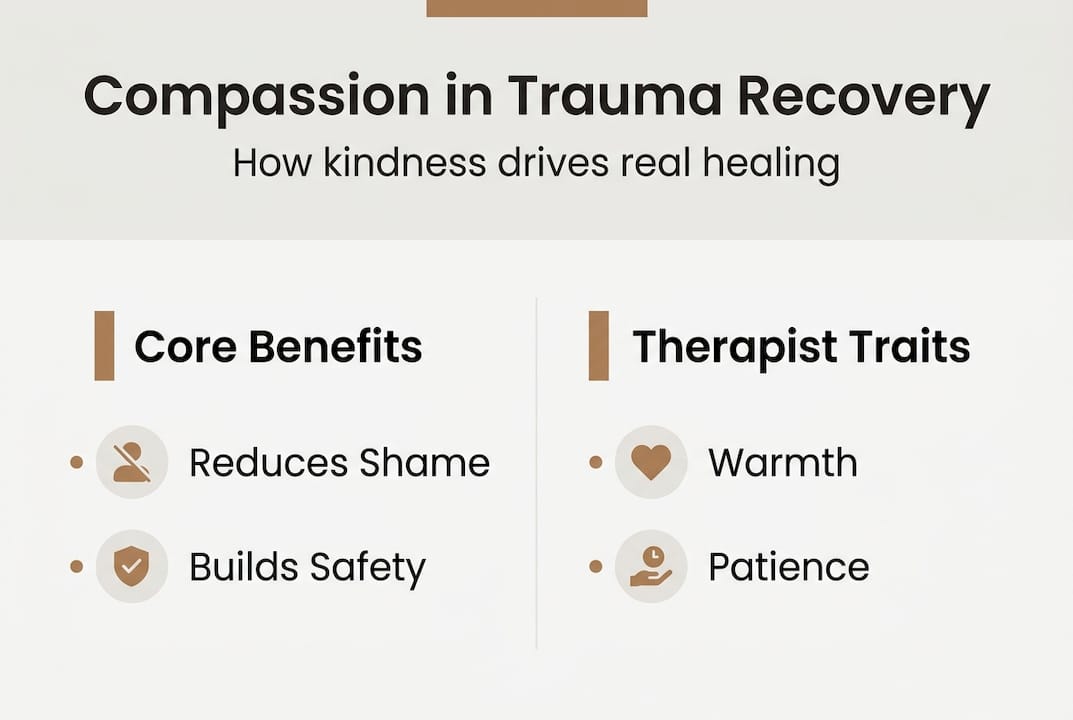
Compassion Focused Therapy (CFT), developed by psychologist Paul Gilbert, is built on this idea. It targets the soothing system, one of three core emotional regulation systems in the brain. This system is activated by feelings of safety, warmth, and connection. For many trauma survivors, this system has been chronically underused. CFT works to gently reawaken it.
Trauma-informed care principles recognize that healing cannot happen when someone feels threatened or shamed. Research shows that CFT reduces shame and self-criticism while actively increasing self-compassion for people with trauma histories. That shift is not cosmetic. It changes how you relate to your own pain.
Here is what compassion in therapy actually looks like in practice:
- Being met without judgment, no matter what you share
- Feeling safe enough to talk about the parts of yourself you have hidden
- Having your experience validated rather than minimized or reframed too quickly
- Reducing the grip of self-blame, which often keeps trauma locked in place
- Building a relationship with a therapist who holds space with warmth, not clinical distance
“Your story is sacred. Healing begins when your pain is truly witnessed, not just processed.”
Compassion is not passive. It is an active, evidence-based ingredient in trauma recovery. And it is one that too many people never receive.
The science behind compassion: Evidence-based approaches
Once you understand what compassion does in the room, it is worth asking: what does the research actually say? The answer is encouraging, and in some ways, surprising.
CFT has been studied across a range of trauma presentations. The results show moderate to high effect sizes for increasing self-compassion and reducing shame and self-criticism. These are not small shifts. For people whose inner critic has been loud for years, this represents real, measurable change.
Mindful Self-Compassion (MSC), another structured program, has also shown strong outcomes for reducing anxiety, depression, and burnout while increasing emotional resilience. These programs work by teaching the mind to relate to pain with kindness rather than resistance or self-attack.
How does this compare to other approaches? Here is a brief overview:
| Therapy approach | Primary focus | Key outcome for trauma |
|---|---|---|
| Cognitive Behavioral Therapy (CBT) | Challenging distorted thoughts | Reduces symptoms, may miss shame |
| EMDR | Reprocessing traumatic memories | Strong for specific trauma memories |
| Compassion Focused Therapy (CFT) | Shame, self-criticism, nervous system | Builds safety, reduces shame cycles |
| Mindful Self-Compassion (MSC) | Self-kindness, mindfulness | Resilience, emotional regulation |
CBT and EMDR are both powerful tools, and they are part of what we use in evidence-based trauma healing. But for people whose trauma involves deep shame or relational wounds, these approaches sometimes need compassion woven into them to really land.
One important finding: self-compassion correlates negatively with PTSD symptoms, anxiety, and depression across multiple studies. In other words, the more someone can offer themselves genuine kindness, the less those symptoms tend to dominate their life. This is not about bypassing pain. It is about creating the internal conditions where healing can actually take root.
Explore more about therapy options that integrate these approaches at Simple Empathy KC.
The special role of compassion for complex trauma, anxiety, and loss
Not all trauma is the same. A single incident, like a car accident, responds differently to therapy than years of emotional neglect, chronic abuse, or loss layered on top of earlier wounds. Complex trauma, often called CPTSD, tends to live in the body, in relationships, and in the way you see yourself.
For adults in Kansas City navigating complex trauma, anxiety, or grief, one of the biggest invisible barriers is shame. Shame whispers that you caused it. That you are too sensitive. That you should be over it by now. These messages do not just hurt. They actively block healing.
Research is clear on this: phase-based therapy integrating compassion outperforms standalone trauma-focused therapy for affect regulation, self-concept, and relationships in people with CPTSD. That matters because affect regulation and self-concept are precisely the areas that complex trauma most damages.
Here is why compassion is especially important for layered, complex experiences:
- Shame and grief often co-exist, making it hard to mourn without self-blame
- Complex trauma often involves a damaged sense of identity, which compassion helps restore
- Anxiety in trauma survivors frequently includes a harsh inner voice, which CFT directly addresses
- Relational wounds heal better within a relationship that models warmth and safety
A compassion-centered therapist does not rush you. They do not push you toward the hardest memory before you feel safe. Creating a safe space for healing is not just a nice extra. It is foundational.
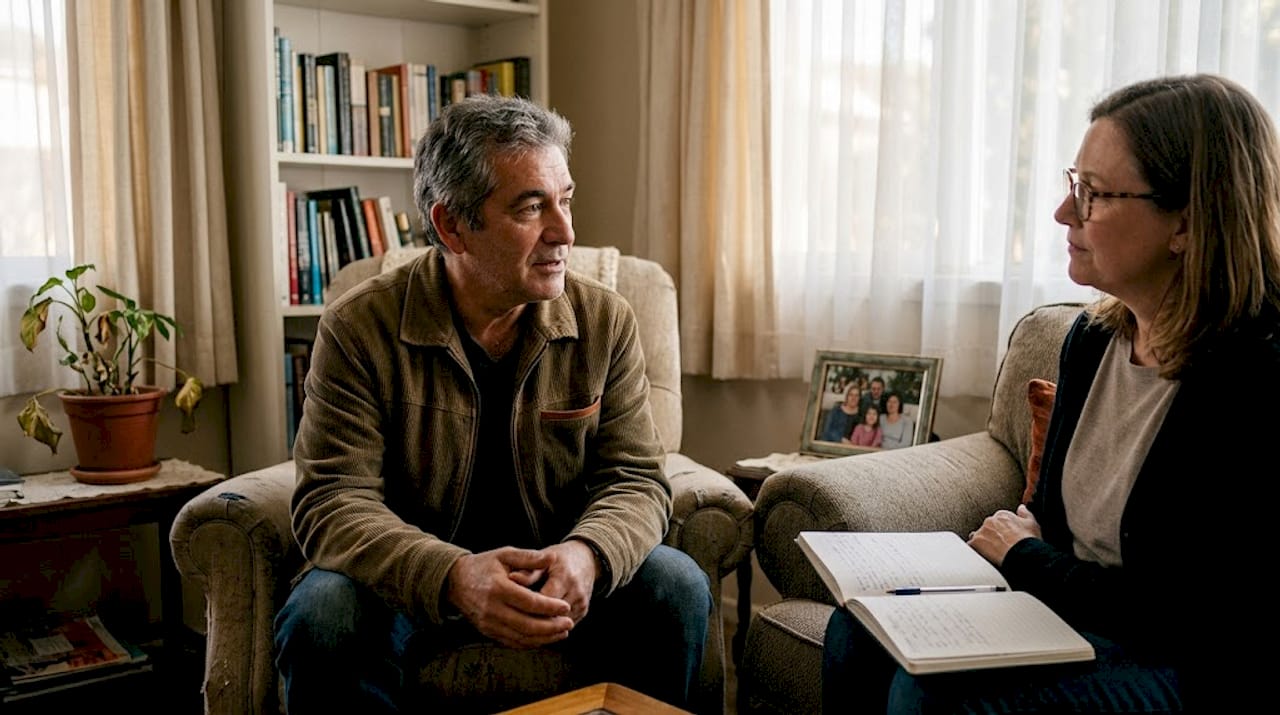
When you are looking for a therapist, here is what to watch for:
| What to look for | What to be cautious about |
|---|---|
| Warmth and genuine presence | Feeling rushed or minimized |
| Explains their approach clearly | Only focuses on symptoms, not the whole person |
| Welcomes your pace | Pushes you before you feel ready |
| Addresses shame directly | Avoids the emotional content of your story |
Pro Tip: When meeting a new therapist, ask directly: “How do you work with shame and self-criticism?” A compassion-informed therapist will have a clear, thoughtful answer. Explore trauma therapy services that center this approach.
How to integrate compassion into your trauma recovery journey
Knowing compassion matters is one thing. Actually letting it in is another. For many trauma survivors, self-compassion can feel foreign, even dangerous. If being vulnerable has ever led to pain, your nervous system may resist kindness as a threat. That response makes complete sense. And it can be gently changed.
Compassion-based interventions like CFT and Mindful Self-Compassion are specifically recommended for building resilience when post-traumatic symptoms run high. Here is a stepwise approach to begin:
- Start with noticing, not fixing. When self-criticism rises, pause and name it: “There is that harsh voice again.” You do not have to argue with it yet. Just witness it.
- Try self-kindness journaling. Write one sentence each morning as if you were speaking to a close friend going through what you are going through. Small, sincere, and direct.
- Use compassionate imagery. Imagine a figure, real or imagined, who embodies unconditional warmth. Picture them beside you when things feel heavy.
- Talk to your therapist about it. Tell them where compassion feels hard. A skilled therapist will not push. They will walk alongside you.
- Anchor it in the body. Place a hand on your chest and take one slow breath. This activates the soothing system. It sounds small. It is not.
Pro Tip: Resistance to self-compassion after trauma is not a character flaw. It is a survival adaptation. The goal is not to force warmth but to slowly make it feel safe. Personalized trauma recovery steps can help you find your own pace.
For daily support between sessions, trauma-informed self-care practices can reinforce what you are building in therapy. And exploring empathy in trauma healing can deepen your understanding of how relational warmth supports this process.
The overlooked power of compassion in trauma healing
Here is something worth sitting with: many evidence-based trauma therapies work well, and yet a significant number of people still feel stuck after completing them. Why?
In our experience, the missing piece is often not technique. It is tone. You can follow every protocol of CBT or EMDR and still leave sessions feeling fundamentally alone in your pain if the relational warmth is not there. Protocols do not heal shame. Presence does.
This is not a criticism of EMDR or CBT. Both are tools we deeply respect. But tools need a hand that holds them with care. For adults whose wounds are relational, healing often requires a relationship as part of the medicine.
We believe healing through compassionate witnessing is not a soft add-on. It is the core. When someone truly sees your pain without flinching, without fixing, without minimizing, something shifts in the nervous system that no technique alone can produce. That shift is real. It is measurable. And it is what we work toward every day.
Compassion is not the gentle cousin of serious therapy. It is serious therapy.
Connect with compassionate trauma therapy in Kansas City
If this article has touched something in you, that recognition is worth paying attention to. Healing is not about pushing through. It is about finding the support that truly sees you.

At Simple Empathy KC, we offer trauma-informed therapy grounded in compassion, presence, and evidence-based care. Whether you are navigating complex trauma, anxiety, grief, or a life that no longer feels like your own, our Kansas City therapists are here to walk alongside you at your pace. Read our trauma-informed guide to learn what a safe therapeutic space can look like, or explore our trauma-informed care services to see how we work. You deserve to come home to yourself.
Frequently asked questions
What makes compassion-focused therapy different from traditional trauma therapy?
CFT specifically targets shame and self-criticism by working to build self-compassion, while traditional trauma therapies often focus primarily on processing traumatic memories. Research shows that CFT reduces shame and increases self-compassion in ways that complement or go beyond what other models address.
How does self-compassion help trauma recovery?
Self-compassion acts as a buffer against the intensity of post-traumatic symptoms while also supporting growth and resilience. Studies show that self-compassion moderates the relationship between trauma symptoms and recovery outcomes, making it a meaningful protective factor.
Is compassion-based therapy effective for complex PTSD?
Yes. Research indicates that phase-based compassion-integrated therapy outperforms trauma-focused therapy alone for emotional regulation, self-concept, and relational healing in people with complex PTSD.
What can I do if I feel resistance to self-compassion in therapy?
Resistance is common and makes sense after trauma. Start with gentle practices like self-kindness journaling and be open with your therapist about where compassion feels hard. Compassion-focused interventions are specifically designed to work with this kind of resistance rather than push past it.