
TL;DR:
- Trauma witnessing involves being emotionally present and attuned without trying to fix or minimize pain.
- Key principles include safety, trust, collaboration, empowerment, and maintaining healthy boundaries to prevent retraumatization.
- Supporting healing through presence requires patience, non-judgment, and respecting the survivor’s pace and experience.
Most people believe that supporting someone through trauma means knowing what to say, offering solutions, or helping them move on quickly. But that belief, however well-meaning, can quietly get in the way of real healing. True support often looks quieter. It looks like staying. It looks like witnessing. Trauma witnessing is one of the most powerful and least understood tools in healing, and it is not about fixing anything. In this article, we will walk through what trauma witnessing actually means, the principles that make it work, the risks involved, and how you can apply it in your own life or find the right support here in Kansas City.
Table of Contents
- What is trauma witnessing?
- Key principles: How trauma witnessing works
- Risks and boundaries: When witnessing becomes overwhelming
- Practical applications: Witnessing as healing in Kansas City
- Why presence—not fixing—is the healing ingredient most people miss
- Find trauma-informed witnessing and support in Kansas City
- Frequently asked questions
Key Takeaways
| Point | Details |
|---|---|
| Trauma witnessing defined | Trauma witnessing is about being present and emotionally attuned, not just watching or trying to fix. |
| Healing principles | Safety, trust, support, collaboration, and empowerment are keys to preventing further harm when witnessing trauma. |
| Secondary trauma risk | Both therapists and loved ones can absorb distress and should set healthy boundaries to protect their well-being. |
| Kansas City resources | Seek trauma-informed, SAMHSA-aligned support in Kansas City to ensure safe and effective healing. |
What is trauma witnessing?
Trauma witnessing is not simply watching someone go through something hard. It is something much more intentional and much more intimate. At its core, trauma witnessing means being emotionally present with another person’s pain without rushing to change it, minimize it, or make it go away. It is an active practice, not a passive one.
Think about the last time someone truly listened to you without trying to fix your problem. That feeling of being fully received, without judgment or redirection, is the heart of what witnessing offers. It tells your nervous system: you are safe here. You do not have to perform or explain. Your story matters.
Researchers describe this quality of presence as withness, a form of solidarity that stands alongside someone rather than trying to pull them forward before they are ready. Withness is the opposite of passive watching. Passive watching is being physically present while emotionally checked out. Withness is active attunement, meaning you are genuinely tracking someone’s emotional experience and responding with care.
This distinction matters deeply in healing. When a trauma survivor shares their story and is met with “have you tried journaling?” or “at least it’s over now,” their nervous system registers a quiet rejection. The message becomes: your pain is too much, let’s move past it. That response, even when kind in intention, can retraumatize.
Witnessing, by contrast, says: I can hold this with you. It validates the reality of what happened. It honors the experience as sacred rather than something to be solved.
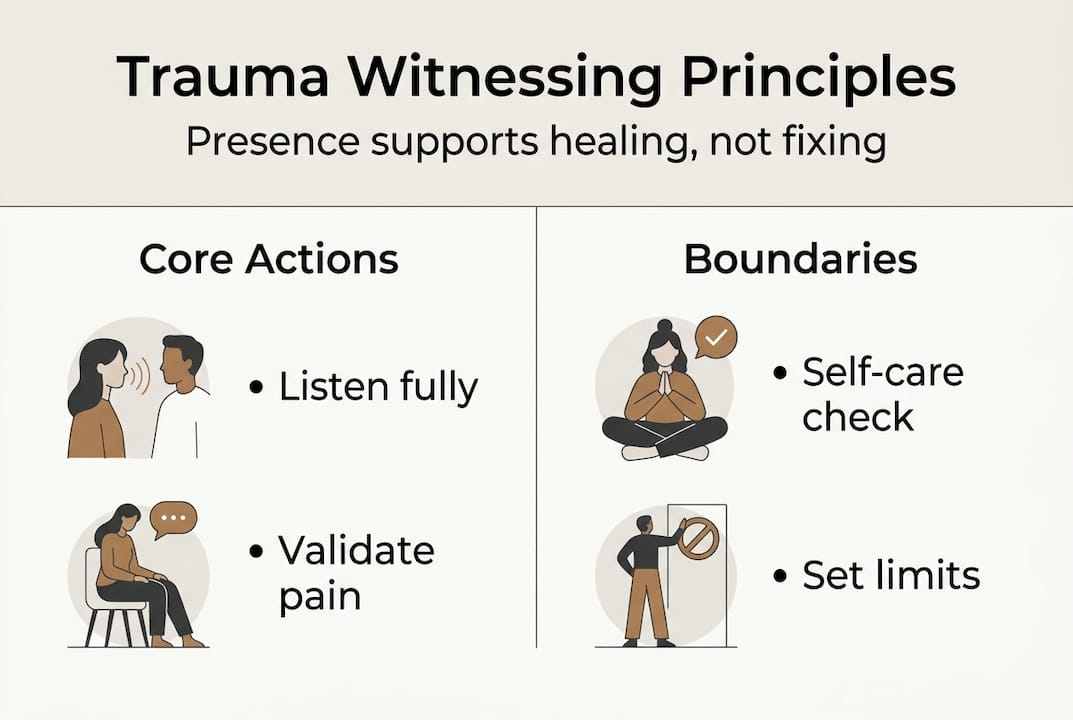
Here is a simple comparison to make this clearer:
| Passive watching | Active witnessing |
|---|---|
| Physically present, emotionally distant | Emotionally attuned and present |
| Rushes to reassure or fix | Stays with the discomfort |
| Minimizes the experience | Validates and honors the story |
| Disconnects from the survivor’s pace | Follows the survivor’s lead |
| Can unintentionally retraumatize | Supports nervous system safety |
“Being witnessed in your pain is not about being pitied. It is about being seen as whole, even in your breaking.”
Trauma witnessing applies in both therapy and everyday relationships. In therapy, it is a foundational part of trauma-informed care principles, where the therapist’s presence creates a container for the client’s experience to unfold safely. In daily life, it shows up when a friend chooses to listen without advice, or when a partner stays close without trying to make the pain disappear.
Common misconceptions include the idea that witnessing means agreeing with everything someone says, or that it requires you to have experienced the same thing. Neither is true. Witnessing simply asks you to be present, curious, and non-judgmental.
Key principles: How trauma witnessing works
Defining trauma witnessing is one thing. Understanding what makes it actually healing is another. The framework that guides trauma-informed witnessing most reliably comes from SAMHSA, the Substance Abuse and Mental Health Services Administration. Their trauma-informed principles offer a clear map for anyone, therapist or loved one, who wants to support a trauma survivor without causing further harm.
Here are the five core principles and what they look like in practice:
- Safety. The person being witnessed must feel physically and emotionally safe. This means no pressure to share more than they are ready to, and no fear of judgment or consequences.
- Trustworthiness and transparency. Being honest about your intentions and consistent in your behavior builds the trust that makes witnessing feel safe rather than threatening.
- Peer support. Shared experiences create connection. When someone feels less alone in their pain, their nervous system begins to soften. Community witnessing, whether in a group or between friends, can be profoundly healing.
- Collaboration and mutuality. Healing is not something done to someone. It happens with them. Good witnessing respects the survivor’s agency and follows their lead.
- Empowerment. The goal is not to rescue but to restore. Witnessing that empowers helps the survivor reconnect with their own strength and voice.
These principles prevent retraumatization by keeping the survivor in the driver’s seat. When any of these elements is missing, even a well-meaning supporter can accidentally recreate the dynamics of the original trauma: powerlessness, shame, or being unseen.
For Kansas City residents seeking support, asking a potential therapist how they apply these principles is a meaningful first step. A provider who can speak clearly to safety, collaboration, and empowerment is one who has likely done the work to understand trauma at a deeper level. You can also explore what a safe space for healing genuinely looks like before your first session.
Practical examples of these principles in daily life include:
- Asking before offering advice: “Would it help to talk through options, or do you just need me to listen?”
- Checking in without pressure: “I am here whenever you are ready. No rush.”
- Acknowledging the weight of what someone shared: “That sounds incredibly hard. Thank you for trusting me with it.”
For additional healing tips rooted in evidence-based care, it helps to understand that these small, intentional responses are not just kind gestures. They are nervous system medicine.
Pro Tip: Before your first therapy session, ask your provider directly: “How do you incorporate trauma-informed principles into your approach?” Their answer will tell you a great deal about how safe you will feel in that space.
Risks and boundaries: When witnessing becomes overwhelming
Trauma witnessing is a gift. But it carries real weight. For therapists, caregivers, and even close friends who regularly hold space for others’ pain, the emotional cost can accumulate in ways that are easy to miss until they become impossible to ignore.
Secondary trauma, sometimes called vicarious trauma, occurs when a person absorbs the emotional impact of another’s traumatic experience. It is not imagined. Research confirms that secondary trauma risks are real for therapists and others who witness pain repeatedly. Compassion fatigue is a related experience, a gradual erosion of empathy and energy that comes from giving so much of yourself over time.
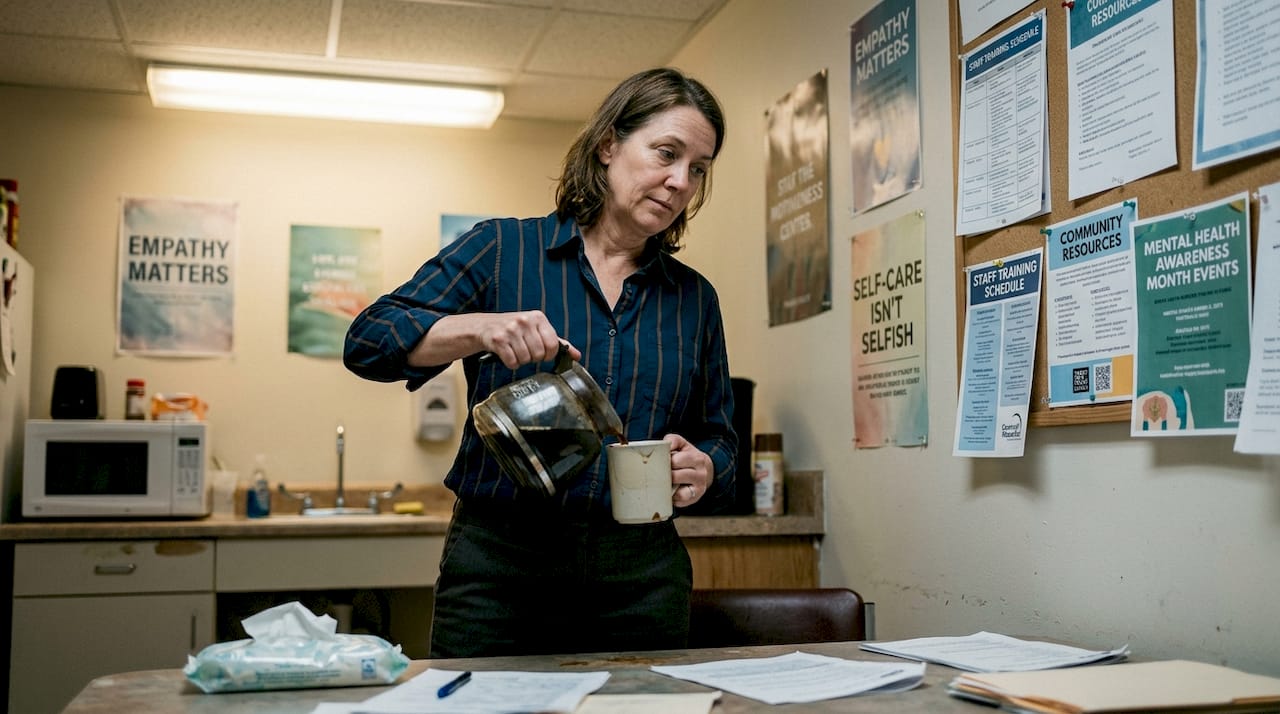
Both conditions are serious. And both are preventable with the right boundaries and support structures in place.
Signs that you may be absorbing others’ trauma include:
- Feeling emotionally numb or detached after conversations
- Intrusive thoughts or images related to what someone shared with you
- Difficulty sleeping or increased anxiety without a clear personal cause
- Feeling responsible for the other person’s healing or pain
- Withdrawing from relationships or losing interest in things you used to enjoy
If you recognize yourself in that list, please take it seriously. Witnessing is not sustainable without self-care and support. This is especially true for those in helping roles, but it applies to anyone who regularly shows up for others in pain.
Setting boundaries does not mean abandoning someone. It means protecting the relationship and your own well-being so that you can continue to show up with genuine presence rather than depletion. Healthy boundaries in witnessing might look like:
- Naming your own limits honestly: “I want to be here for you. I also need to take care of myself so I can keep showing up.”
- Seeking supervision, therapy, or peer support for yourself
- Knowing when to refer someone to a professional rather than carrying the weight alone
For those healing from trauma themselves, understanding these risks also helps you be thoughtful about who you lean on and how much you ask of the people in your life.
Pro Tip: If you frequently witness others’ trauma, check in with yourself weekly. Ask: Am I sleeping? Am I still feeling like myself? Am I carrying something that is not mine? These questions are not selfish. They are essential.
Practical applications: Witnessing as healing in Kansas City
Knowing what trauma witnessing is and understanding its risks brings us to the most important question: how do you actually do this, safely and meaningfully, in your own life?
Here are practical steps to begin:
- Listen without an agenda. When someone shares something painful, resist the pull to respond immediately. Breathe. Let their words land. Then reflect back what you heard before offering anything else.
- Ask permission before advising. A simple “Would it help if I shared some thoughts, or do you just need me to hear you?” shifts the entire dynamic.
- Validate before moving forward. Saying “that makes complete sense given what you went through” costs nothing and means everything.
- Stay regulated yourself. Your calm nervous system communicates safety to theirs. If you feel overwhelmed, it is okay to say so gently and take a breath together.
- Follow their lead on pace. Healing is not linear. Some days a person needs to revisit the same story. That is not going backward. That is processing.
In therapy, witnessing is woven into every session. A skilled trauma-informed therapist does not just listen. They track your body language, your pauses, your breath. They notice what you cannot yet say. This is why finding a provider who genuinely practices trauma care in Kansas City matters so much.
When searching for a Kansas City therapist, look for someone who:
- Aligns with SAMHSA-aligned care frameworks
- Uses modalities like EMDR, IFS, or somatic therapy
- Speaks openly about safety, collaboration, and your right to set the pace
“You do not have to earn the right to be witnessed. Your story, exactly as it is, is enough.”
Community witnessing also holds tremendous power. When friends, family, or peers truly see your experience, something in your nervous system begins to settle. You do not have to carry it alone anymore. Pair this with a thoughtful self-care workflow and you create a foundation for lasting healing.
Why presence—not fixing—is the healing ingredient most people miss
Here is something we have seen over and over: the most well-meaning people in a trauma survivor’s life often do the most accidental harm. Not because they are unkind. Because they are trying so hard to help that they cannot stop moving long enough to simply be there.
Fixing feels productive. Presence feels passive. But that instinct gets it backwards. When you try to fix someone’s pain, you are subtly communicating that their pain is a problem to be solved rather than an experience to be honored. And for someone whose trauma involved feeling powerless or dismissed, that message lands hard.
Presence, on the other hand, communicates something profound: you are not too much. Your pain is not a burden. I am not going anywhere. That kind of empathy in trauma healing is not passive at all. It is one of the most courageous and active things a person can offer.
You do not need to have answers. You do not need to have experienced the same thing. You just need to stay. That is the work. And it is enough.
Find trauma-informed witnessing and support in Kansas City
If something in this article resonated with you, whether you are seeking healing for yourself or wanting to show up better for someone you love, you do not have to figure it out alone.

At Simple Empathy KC, we believe that healing begins when you are truly witnessed. Our therapists are trained in trauma-informed approaches that honor your story without rushing it. Whether you are navigating complex trauma, anxiety, grief, or identity shifts, we are here to hold space with presence, not pressure. Explore our trauma-informed healing guide or learn more about trauma-informed care in Kansas City. When you are ready, Simple Empathy KC is here.
Frequently asked questions
What makes witnessing trauma different from experiencing it?
Witnessing trauma means being present to another’s pain without having it happen to you, yet it can still deeply affect your emotional well-being. Research confirms that repeated witnessing carries real risks, including secondary trauma, even for trained professionals.
Can witnessing trauma cause lasting emotional effects?
Yes. Supporters and professionals may develop secondary trauma or compassion fatigue from repeated exposure. Recognizing the signs of secondary trauma early makes it much easier to seek support before the effects become lasting.
How can I support someone without taking on their trauma?
Focus on listening rather than fixing, and use SAMHSA-informed principles like setting clear boundaries, seeking your own support, and following the survivor’s lead on pace and comfort.
Where can I find trauma-informed therapists in Kansas City?
Look for providers who align with SAMHSA trauma-informed frameworks and who use presence-focused, evidence-based modalities like EMDR, IFS, or somatic therapy in their practice.