
TL;DR:
- Sensitive individuals respond well to therapy due to high motivation and deep self-awareness.
- Trauma-informed, CBT, and Internal Family Systems are effective approaches for sensitive adults.
- Sensitivity is a strength that can lead to profound healing when supported by safe, understanding therapy.
You’ve probably been told to toughen up. To stop taking things so personally. To not feel so much. But what if your sensitivity isn’t the problem? What if it’s actually the part of you that holds the most capacity for healing? Research consistently shows that highly sensitive people often respond to therapy with above-average outcomes, especially for anxiety and trauma. This guide is for you if you’re a deeply feeling adult in Kansas City who wants to understand why therapy is uniquely suited to your nervous system, and how to find support that truly honors who you are.
Table of Contents
- Understanding sensitivity: More than just feeling deeply
- How therapy addresses the core needs of sensitive people
- Common obstacles: Why sensitive people struggle to seek therapy
- What to expect: Healing milestones for sensitive people in therapy
- Our take: Why sensitivity is your greatest healing asset
- Get support designed for sensitive people in Kansas City
- Frequently asked questions
Key Takeaways
| Point | Details |
|---|---|
| Sensitivity as strength | Therapy turns sensitivity into a powerful tool for self-understanding and growth. |
| Evidence-based results | CBT and trauma-informed therapy deliver strong outcomes for sensitive adults facing anxiety and overwhelm. |
| Overcoming barriers | Trust, safe spaces, and trauma-informed therapists help sensitive people access the support they deserve. |
| Personalized healing path | Sensitive people progress with milestones like improved regulation, courage, and self-acceptance in therapy. |
Understanding sensitivity: More than just feeling deeply
Being highly sensitive is not a diagnosis. It’s a trait. Psychologist Elaine Aron first described the Highly Sensitive Person, or HSP, in the 1990s. She found that roughly 15 to 20 percent of the population processes sensory and emotional information more deeply than others. Your nervous system is simply wired to notice more.
That depth of processing comes with real gifts. You pick up on subtleties others miss. You feel empathy in a way that can be almost physical. You think carefully before acting. But it also means that loud environments, conflict, or emotional weight can leave you feeling completely drained.
Here are some common traits of highly sensitive people:
- Deep emotional processing: You reflect on experiences long after they happen.
- High empathy: You feel other people’s emotions as if they were your own.
- Overstimulation: Crowds, noise, or intense situations can overwhelm your system quickly.
- Strong intuition: You often sense things before you can explain them.
- Rich inner life: You tend toward creativity, introspection, and meaning-making.
The biggest myth about sensitivity is that it equals weakness. It doesn’t. Sensitivity is a biological trait with evolutionary roots. The idea that you’re “too much” or “overreacting” is a cultural story, not a clinical truth.
“Your softness is not a flaw. It is the very quality that makes you capable of profound connection and healing.”
One of the most important things to understand is that empathy in healing is not just a nice-to-have. It’s a core mechanism in how sensitive people grow. When you feel genuinely seen in a therapeutic relationship, your nervous system begins to soften. That’s where real change starts.
Research supports this. While HSP-specific therapy benchmarks are still emerging, sensitive individuals consistently show strong therapy responses due to two key qualities: high motivation to heal and deep self-awareness. These are the exact ingredients that make therapy work.
How therapy addresses the core needs of sensitive people
Therapy isn’t one-size-fits-all. For sensitive adults, the most effective approaches are those that work with your nervous system rather than against it. Three modalities stand out.
1. Cognitive Behavioral Therapy (CBT) helps you identify thought patterns that fuel anxiety and self-doubt. For sensitive people, this often means untangling the belief that feeling deeply is dangerous.
2. Internal Family Systems (IFS) invites you to explore the different “parts” of yourself, including the parts that carry shame, fear, or old wounds. Sensitive people often thrive in IFS because their natural self-awareness gives them direct access to these inner experiences.
3. Trauma-informed care recognizes that many sensitive adults carry wounds from environments that didn’t honor their nature. This approach creates the safety your nervous system needs to begin healing.
Here’s how these methods map to common HSP challenges:
| Challenge | Therapy approach | What it does |
|---|---|---|
| Anxiety and worry | CBT | Reframes catastrophic thinking |
| Emotional overwhelm | Somatic and IFS | Regulates the nervous system |
| Self-doubt and shame | IFS, trauma-informed care | Heals inner critic patterns |
| Overstimulation | Somatic therapy | Builds body-based coping tools |
| Relational wounds | Attachment-focused therapy | Restores trust and safety |
The data here is meaningful. CBT effectiveness for anxiety is well-documented, with meta-analyses showing effect sizes between d=0.63 and d=1.82 across anxiety and depression. For sensitive people who bring strong motivation and insight to sessions, outcomes often land at the higher end of that range.
You can explore more about this in our guide to evidence-based trauma healing tips, which walks through practical tools grounded in research.
Finding the right fit matters enormously. A trauma-informed safe space is not just a nice phrase. It’s a specific set of practices that signal to your body: you are safe here.
Pro Tip: When reaching out to a new therapist, ask directly: “Do you have experience working with highly sensitive people or trauma?” Their answer will tell you a lot about whether the fit is right.
Common obstacles: Why sensitive people struggle to seek therapy
Knowing that therapy works and actually walking through the door are two very different things. Sensitive people face some specific barriers that deserve honest acknowledgment.
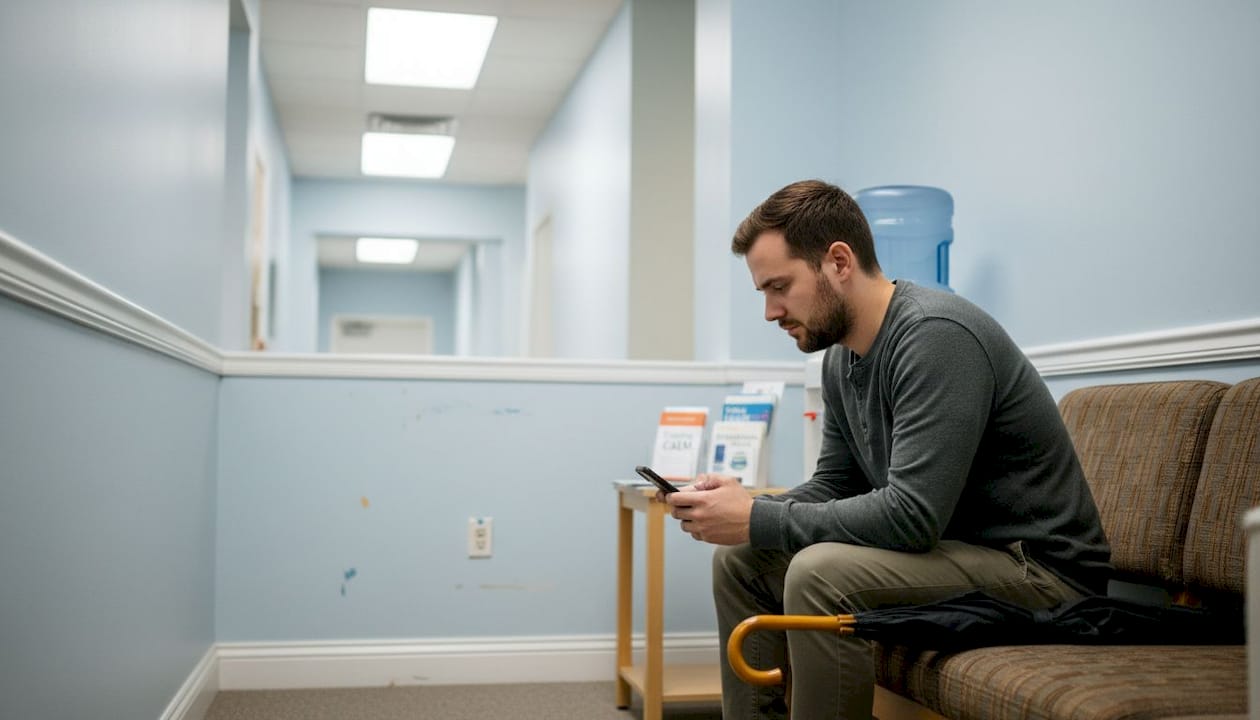
Fear of judgment. If you’ve spent years being told you’re “too much,” the idea of sharing your inner world with a stranger can feel terrifying. What if they confirm your worst fear, that something is wrong with you?
Overwhelm before you even begin. Researching therapists, making calls, filling out forms. For someone whose nervous system is already taxed, the logistics of starting therapy can feel like too much.
Past negative experiences. Some sensitive people have seen therapists who minimized their experiences or pushed them to “just think differently.” That kind of mismatch leaves a mark.
Here are some strategies that can help you move through these obstacles:
- Start small. You don’t have to commit to months of therapy. One conversation is enough to begin.
- Look for trauma-informed language. Practices that use words like “nervous system,” “attachment,” and “body-based” are more likely to understand your needs.
- Bring a question. Walking in with one specific question gives your mind something to hold onto when anxiety spikes.
- Trust your gut. Sensitive people are often excellent judges of relational safety. If something feels off in a first session, it’s okay to keep looking.
According to large-scale therapy research, outcomes for motivated, self-aware clients consistently exceed meta-analytic averages. Your sensitivity is not a barrier to healing. It’s a catalyst.
The path to healing often begins with one small act of reaching out. Our step-by-step trauma recovery guide can help you understand what that process looks like before you even schedule your first session.
Pro Tip: Many therapists offer a free 15-minute consultation. Use it not to explain your whole story, but simply to feel whether the space feels safe.
What to expect: Healing milestones for sensitive people in therapy
Healing is not a straight line. But there are real, recognizable milestones that sensitive adults tend to reach in therapy, and knowing them in advance can help you trust the process.
Here’s what the journey often looks like:
- Building safety. The first phase is about your nervous system learning that this space is different. Progress here looks like showing up consistently, even when it feels hard.
- Naming what’s there. You begin to identify emotions with more precision. Instead of “I feel bad,” you start to say “I feel ashamed” or “I feel afraid.”
- Processing old wounds. With a skilled therapist, you begin to revisit painful experiences in a way that doesn’t retraumatize. This is where modalities like EMDR and IFS do their deepest work.
- Building new patterns. You start responding to life differently. Boundaries feel possible. Relationships feel safer. Your nervous system begins to regulate more easily.
- Coming home to yourself. This is the milestone that sensitive people often describe as the most profound. You stop fighting your nature and begin to live from it.
| Typical milestone | Sensitive-specific version |
|---|---|
| Reduced anxiety symptoms | Nervous system learns to soften, not just suppress |
| Better communication | Emotional vocabulary deepens significantly |
| Healthier boundaries | Boundaries come from self-worth, not fear |
| Improved relationships | Empathy becomes a strength, not a burden |
Research on therapy outcomes for anxiety shows effect sizes well above standard benchmarks for clients who engage deeply with the process. Sensitive people, by nature, tend to engage deeply.
Progress is not always linear. Some weeks will feel like regression. That’s normal, and it’s actually part of healing. Learning about trauma-informed care principles can help you understand why healing sometimes feels like two steps forward and one step back. Pair that with a solid trauma-informed self-care practice and you’ll have real support between sessions.
Our take: Why sensitivity is your greatest healing asset
Here’s something we believe deeply at Simple Empathy KC: sensitivity is not a problem to solve. It’s the engine of transformation.
We’ve seen this again and again. Sensitive clients often make breakthroughs faster than others, not because therapy is easier for them, but because they bring something irreplaceable to the room: presence. They notice. They feel. They’re willing to go to the places that matter.
Many therapists still treat sensitivity as something to manage or reduce. We think that’s exactly backward. The goal isn’t to make you less sensitive. It’s to help your nervous system feel safe enough that your sensitivity becomes a source of strength rather than suffering.
The discomfort you feel isn’t a sign that something is broken. It’s a signal that your system is paying attention. When you work with a therapist who understands that, something shifts. What once felt like a wound begins to feel like wisdom.
If you want to understand what truly transformative empathy looks like in a therapeutic relationship, that’s the kind of care we’re committed to offering.
Get support designed for sensitive people in Kansas City
If any part of this article felt like it was written for you, that’s not a coincidence. At Simple Empathy KC, we built our practice around people exactly like you: deeply feeling, healing-seeking, and ready for something real.

Our therapy services in Kansas City are rooted in trauma-informed care, IFS, EMDR, and somatic approaches designed to meet your nervous system where it is. We know how to hold space for sensitivity without pathologizing it. Whether you’re navigating anxiety, complex trauma, or simply a longing to come home to yourself, we’re here. Explore what creating a safe space for healing looks like with us, and take the first step at your own pace.
Frequently asked questions
What is an HSP and how does therapy help?
A Highly Sensitive Person (HSP) processes emotions and sensory input more deeply than most people; therapy helps by offering personalized strategies to manage overwhelm, anxiety, and self-doubt. Sensitive clients show strong therapy responses largely because of their high motivation and self-awareness.
Is therapy proven to help sensitive people more than others?
Research suggests that motivated, self-aware clients tend to exceed average therapy outcomes, especially for anxiety and depression. Sensitive people often bring both of those qualities naturally.
What therapy approaches are best for HSPs?
Trauma-informed care, CBT, and Internal Family Systems (IFS) are among the most effective for sensitive adults. CBT shows effect sizes of d=1.61 for depression and d=1.82 for anxiety, making it one of the most evidence-supported tools available.
How do I find a trauma-informed therapist in Kansas City?
Look for therapists who use language like “nervous system,” “attachment,” and “trauma-informed” in their profiles, or search local directories that filter by specialty. Asking directly about their experience with sensitive adults is always a good first step.
What are early signs of progress for sensitive people in therapy?
Early signs include greater emotional regulation, a growing sense of self-compassion, and feeling safer in close relationships. Many sensitive clients also notice they can name their emotions with more precision, which is a quiet but powerful shift.