
TL;DR:
- Trauma recovery involves non-linear phases, setbacks are part of healing, not failure.
- Building safety and stabilization are essential before processing traumatic memories.
- Reconnection and relational healing are crucial for long-term recovery and resilience.
Trauma recovery can feel like standing at the edge of a vast, unfamiliar wilderness with no map. You know something needs to change, but the path forward feels murky, overwhelming, and sometimes terrifying. If you’re carrying complex trauma, anxiety, or grief, you deserve more than vague reassurances. You deserve a clear, compassionate framework that honors where you are right now. This guide walks you through the proven phases of trauma recovery, practical steps you can actually use, and how to personalize the process so it truly fits your life and nervous system. You are not alone in this, and healing is genuinely possible.
Table of Contents
- What you need to know before you start
- Step 1: Safety and stabilization
- Step 2: Remembrance and mourning
- Step 3: Reconnection and integration
- A trauma therapist’s perspective: What actually makes recovery work
- Start your healing journey with trauma-informed support
- Frequently asked questions
Key Takeaways
| Point | Details |
|---|---|
| Start with safety | Establishing safety and stabilizing emotions is essential before diving into trauma processing. |
| Use evidence-based steps | Following proven, phased approaches is linked to better outcomes for complex trauma and grief. |
| Personalize your healing | No step-by-step process is one-size-fits-all—adapt the pace and tools to your needs. |
| Relationship matters | A trusting therapeutic alliance and ongoing support are critical for lasting recovery. |
| Stay patient and consistent | Healing from trauma is non-linear, so persistence and self-compassion help you keep moving forward. |
What you need to know before you start
Before anything else, take a breath. Healing is not a race, and starting with the right foundation matters more than starting fast. There are a few things worth understanding before you move into any structured recovery process.
First, recovery is not a straight line. Judith Herman’s three-phase model is one of the most respected frameworks in trauma care, and even within it, people move back and forth between phases. That’s not failure. That’s how healing actually works. Setbacks are part of the process, not signs that something is wrong with you.
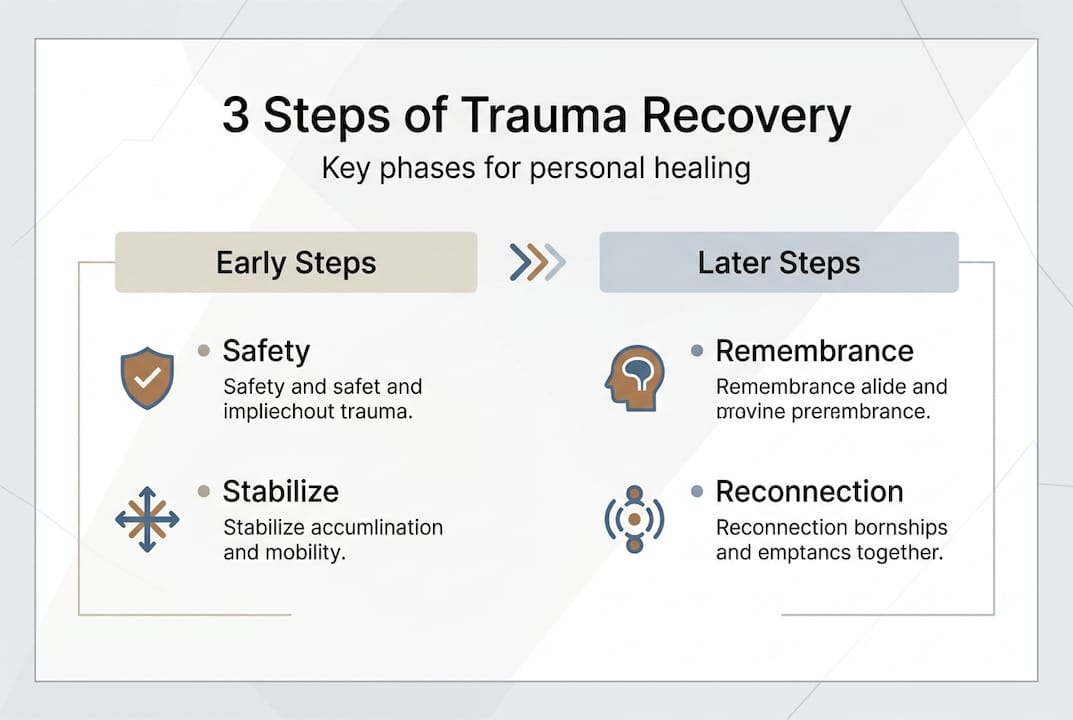
Second, safety must come before processing. Trying to work through traumatic memories before your nervous system feels stable can lead to overwhelm rather than relief. As research on complex PTSD consistently shows, assessing readiness and prioritizing safety before processing is essential for avoiding retraumatization.
Here are the core prerequisites to have in place before beginning:
- Basic physical safety: You need a living situation and daily environment where you feel physically secure.
- A support network: Even one trusted person, a therapist, friend, or group, makes a meaningful difference.
- Trigger awareness: Knowing what activates your nervous system helps you prepare and protect yourself.
- A willingness to go slowly: Healing honors your pace. Rushing rarely works.
Spending time creating a safe space for healing in your environment and daily routine is a meaningful first act of self-care. Practices like trauma-informed self-care can help you build this foundation gently.
“Healing is not linear. It is a spiral. You may revisit the same ground, but each time you return, you bring more of yourself with you.”
Pro Tip: Keep a simple journal to track how you feel before and after any healing-related activity. Patterns will emerge over time, and that self-knowledge becomes one of your most powerful tools.
Step 1: Safety and stabilization
Once you have the right mental and emotional setup, it’s vital to focus on the first phase: safety and stabilization. This phase is not about avoiding your trauma. It’s about building the inner and outer resources you’ll need to eventually face it.
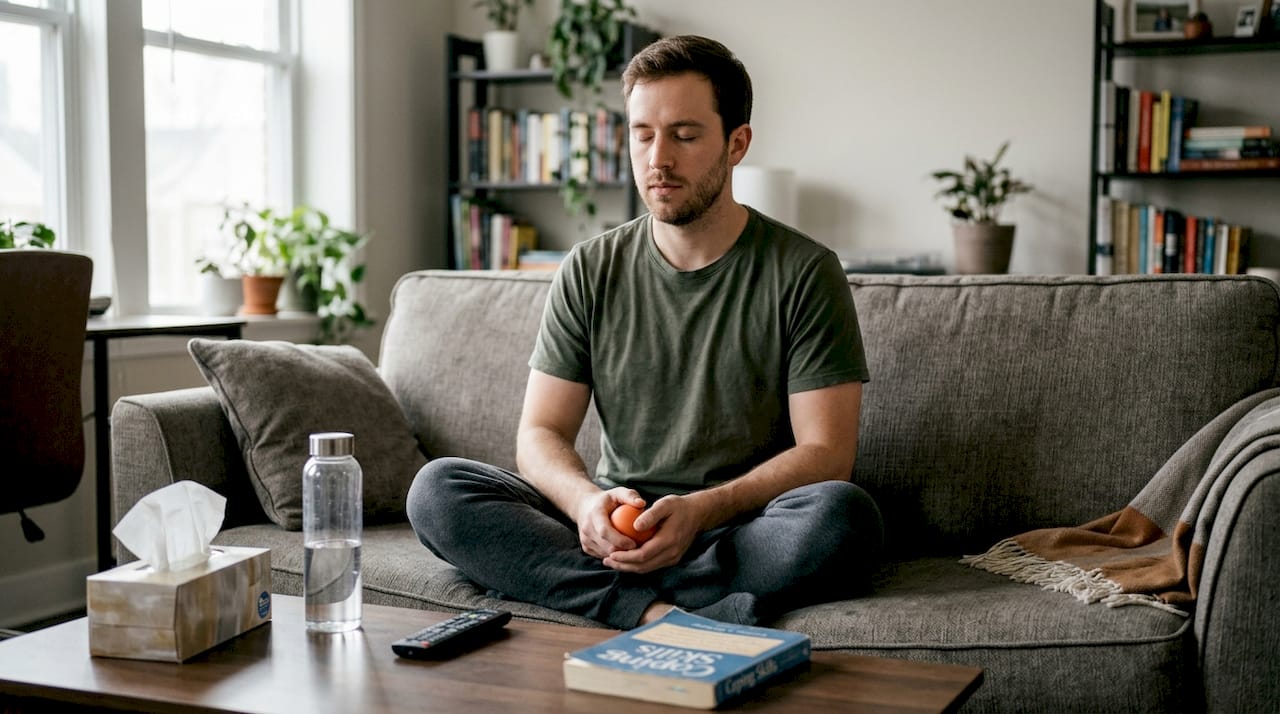
Judith Herman’s foundational framework identifies safety and stabilization as the essential first step, involving establishing a safe environment, learning to regulate emotions, and building coping skills before any memory processing begins.
Safety has three layers worth understanding:
| Layer | What it means | Example actions |
|---|---|---|
| Physical safety | Your body and environment feel secure | Stable housing, safe relationships |
| Emotional safety | You can feel feelings without being overwhelmed | Grounding practices, breathing techniques |
| Relational safety | You have trustworthy people around you | Therapy, support groups, close friends |
Here’s a step-by-step approach to building stabilization:
- Learn grounding techniques. The 5-4-3-2-1 method (naming five things you see, four you can touch, and so on) helps anchor you in the present moment when anxiety spikes.
- Build a daily routine. Predictability soothes a nervous system that has been living in survival mode. Even small rituals like morning tea or an evening walk matter.
- Practice emotion regulation. Skills like deep breathing, progressive muscle relaxation, and mindful movement help your body learn that it can feel and then return to calm.
- Develop a safety plan. Write down who to call, what to do, and where to go if you feel overwhelmed or unsafe. Keep it somewhere accessible.
The APA guidelines for treating PTSD and trauma emphasize that stabilization is not a box to check once. It’s an ongoing practice you return to throughout recovery.
You can explore a full self-care workflow for healing to support this phase, along with trauma healing tips grounded in evidence.
Pro Tip: Write your safety plan on a small card and keep it in your wallet or phone case. Having it physically close reduces the mental load of remembering what to do when distress peaks.
Signs you may be ready to move forward: You can feel difficult emotions without being completely overwhelmed. You have at least one stable, trusting relationship. Your daily functioning has improved even modestly.
Step 2: Remembrance and mourning
After building stability, many are ready, in their own time, for the next profound phase: remembrance and mourning. This is where you begin to make meaning of what happened to you, and to grieve what was lost.
This phase can feel intense. That’s normal. When you start to look at painful memories with support, emotions that were frozen or buried begin to move. Movement is healing, even when it’s uncomfortable.
Evidence-based therapies used in this phase include:
- EMDR (Eye Movement Desensitization and Reprocessing): Uses bilateral stimulation to help your brain reprocess traumatic memories so they lose their emotional charge.
- CPT (Cognitive Processing Therapy): Helps you examine and shift the beliefs formed around your trauma, such as shame or self-blame.
- TF-CBT (Trauma-Focused Cognitive Behavioral Therapy): Combines cognitive and behavioral tools specifically designed for trauma responses.
- DBT (Dialectical Behavior Therapy): Builds distress tolerance and emotional regulation skills, especially helpful for complex presentations.
| Therapy | Best for | Format |
|---|---|---|
| EMDR | Memory reprocessing, PTSD | Individual sessions |
| CPT | Changing trauma-related beliefs | Individual or group |
| TF-CBT | Trauma with anxiety and avoidance | Individual |
| DBT | Emotional dysregulation, self-harm | Group and individual |
Research on the effectiveness of therapies for complex trauma shows that CPT, TF-CBT, and EMDR are among the most supported, while DBT offers meaningful benefits for distress tolerance and emotion regulation, particularly for complex PTSD presentations.
Mourning is also part of this phase. You may grieve the childhood you deserved, the relationships that hurt you, or the version of yourself that existed before the trauma. This grief is not weakness. It is part of healing from trauma and processing complex trauma with honesty.
“Grief is not the opposite of healing. It is often the doorway into it.”
Know when to slow down. If you feel destabilized, dissociated, or unable to function day to day, return to stabilization practices. There is no shame in stepping back.
Step 3: Reconnection and integration
With memories processed and emotions mourned, the essential next phase is reconnecting, with yourself, with others, and with daily life. This phase is about reclaiming who you are beyond your trauma.
Reconnection looks different for everyone. For some, it means rebuilding trust in relationships. For others, it means rediscovering joy in activities that once felt impossible. Both are valid. Both matter.
Key elements of this phase include:
- Rebuilding relationships: Learning to trust again, set boundaries, and let people in at a pace that feels safe for your nervous system.
- Creating meaningful routines: Structure and purpose support long-term recovery more than most people expect.
- Practicing self-compassion: The way you speak to yourself matters. Healing requires learning to offer yourself the same gentleness you would offer a dear friend.
- Monitoring your progress: Notice small shifts. A moment of laughter, a night of better sleep, a boundary held with kindness. These are signs of recovery.
Research on complex trauma recovery outcomes highlights that the therapeutic alliance, the quality of the relationship between you and your therapist, is one of the strongest predictors of sustained gains. Feeling genuinely seen and supported is not a luxury. It is a clinical necessity.
Statistic to hold onto: Studies on long-term recovery outcomes show that 40 to 60 percent of people with PTSD and complex trauma experience significant symptom remission with structured, sustained treatment. Recovery is not just possible. It is probable.
Exploring empathy in trauma recovery and understanding connection through presence in therapy can help you understand why the relational dimension of healing is so powerful.
Pro Tip: At the end of each week, write down one thing that felt even slightly easier than it did a month ago. Over time, this list becomes evidence of your own resilience.
A trauma therapist’s perspective: What actually makes recovery work
Here is something the structured frameworks don’t always say plainly: most real recovery is quieter and slower than people expect. There are rarely dramatic breakthroughs. More often, there are small moments of recognition, a softening, a breath taken more freely, a memory that no longer pulls you under.
The phases matter. The evidence-based therapies matter. But what we see again and again is that relational factors, the quality of the therapeutic alliance, the presence of genuine empathy, predict sustained gains more reliably than any single technique.
Flexibility matters more than following steps perfectly. If you’re in phase two but need to return to stabilization for a few weeks, that is not regression. That is wisdom. Personalization is not a compromise of the model. It is the model working correctly.
The role of therapeutic presence in healing cannot be overstated. Being truly witnessed, without judgment, without agenda, changes something in the nervous system that no worksheet alone can reach. Your healing is sacred. Honor the pace it asks of you.
Start your healing journey with trauma-informed support
You’ve taken something meaningful just by reading this far. Understanding the phases of recovery, knowing what to expect, and recognizing that healing is possible are powerful first steps. Now, the question is: what comes next for you?

At Simple Empathy KC, we offer trauma-informed therapy in Kansas City designed around your unique story. Whether you’re just beginning or somewhere in the middle of your healing journey, our therapists are here to walk alongside you with presence and care. Explore our safe space guide, browse trauma healing tips, or reach out directly through our Kansas City therapy services page. You don’t have to figure this out alone.
Frequently asked questions
How long does trauma recovery typically take?
Recovery time varies greatly, but large-scale research shows significant symptom improvement within months of structured therapy, with lasting gains often requiring ongoing support over time.
Can I start trauma recovery without a therapist?
You can begin with self-care and safety steps on your own, but evidence on complex cases consistently shows that therapy greatly enhances outcomes and is especially crucial when trauma is layered or longstanding.
Is it normal to feel worse before feeling better during recovery?
Yes, distress can increase during remembrance and mourning, but with proper stabilization in place, this is expected and typically temporary rather than a sign that something has gone wrong.
Which therapy is best for complex PTSD?
Phase-based approaches using CPT, TF-CBT, and EMDR are among the most strongly supported for complex PTSD, with personalization based on individual symptoms, history, and needs.
Recommended
- How to heal from trauma: evidence-based steps for recovery
- Build a trauma-informed self-care workflow: 5 steps
- Top trauma healing tips: 7 evidence-based paths to recovery
- How to process complex trauma: 3 evidence-based steps
- Healing Trauma Process 2026: Step-by-Step Recovery Guide – ReviveHealthTherapy
- How to Start Trauma Therapy: A Step-by-Step Guide to Healing