
TL;DR:
- Trauma disrupts nervous system processing of safety, threat, and connection, leading to lasting symptoms.
- Healing requires a phase-based approach focused on safety, processing, and integration with supportive therapy.
- Trust, relational connection, and self-compassion are essential to trauma recovery, beyond techniques alone.
Trauma has a way of making you feel like you’re the only one carrying something this heavy. If you’re living in Kansas City and struggling with anxiety, flashbacks, emotional numbness, or a deep sense of disconnection from yourself, you are not alone, and you are not broken. Research confirms that trauma affects mood, self-worth, relationships, and physical health in ways that can persist for years without the right support. The good news is that evidence-based therapies and trauma-informed care genuinely work. This guide walks you through what trauma really is, how to prepare for healing, which therapies are most effective, and what to do when the road gets hard.
Table of Contents
- Understanding trauma and its impact
- Preparing for healing: Building safety and support
- Evidence-based trauma therapies: What works and why
- Common challenges and how to measure healing progress
- What most guides miss about trauma healing
- Compassionate support for your trauma healing journey
- Frequently asked questions
Key Takeaways
| Point | Details |
|---|---|
| Safety comes first | Building trust and creating a safe space is essential before starting trauma processing work. |
| Evidence-based therapies work | Approaches like TF-CBT, EMDR, and DBT offer strong outcomes, especially with relational healing. |
| Progress is personal | Healing is non-linear and may take time, setbacks are normal and not a sign of failure. |
| Support matters | A strong therapeutic alliance and community resources improve the chances of lasting recovery. |
Understanding trauma and its impact
Trauma is not just a bad memory. It is a disruption in how your nervous system processes safety, threat, and connection. When something overwhelming happens and your system cannot fully integrate it, the experience stays lodged in your body and mind, shaping how you feel, think, and relate to others long after the event has passed.
There is an important distinction between PTSD (Post-Traumatic Stress Disorder) and complex PTSD (CPTSD). PTSD often follows a single identifiable event, such as an accident or assault. CPTSD develops from prolonged, repeated trauma, especially in childhood or within close relationships. It carries additional layers of pain.
Common symptoms of CPTSD include what clinicians call disturbances in self-organization (DSO), which means:
- Persistent emotional dysregulation (sudden floods of feeling or complete numbness)
- Deeply negative beliefs about yourself, such as shame or worthlessness
- Difficulty trusting others or maintaining close relationships
- Chronic physical tension, fatigue, or unexplained pain
- Dissociation or feeling detached from your own life
These symptoms are not character flaws. They are your nervous system’s attempt to protect you.
| Symptom area | PTSD | CPTSD |
|---|---|---|
| Intrusive memories | Common | Common |
| Emotional dysregulation | Moderate | Severe |
| Negative self-concept | Sometimes | Core feature |
| Relationship difficulties | Sometimes | Pervasive |
| Dissociation | Occasional | Frequent |
The research is clear that phase-based approaches outperform single-phase therapies for DSO symptoms in complex trauma. This means healing is not one straight line. It moves through stages: safety first, then processing, then integration. Understanding this from the start helps you hold realistic, compassionate expectations for yourself.
If you want to learn more about creating a safe space for your own healing, that foundation matters more than most people realize.
Preparing for healing: Building safety and support
With an understanding of trauma’s effects, the next step is laying the groundwork for safe, effective healing. Before you can process what happened, your nervous system needs to feel stable enough to do the work. Rushing into trauma processing without this foundation can actually increase distress rather than reduce it.
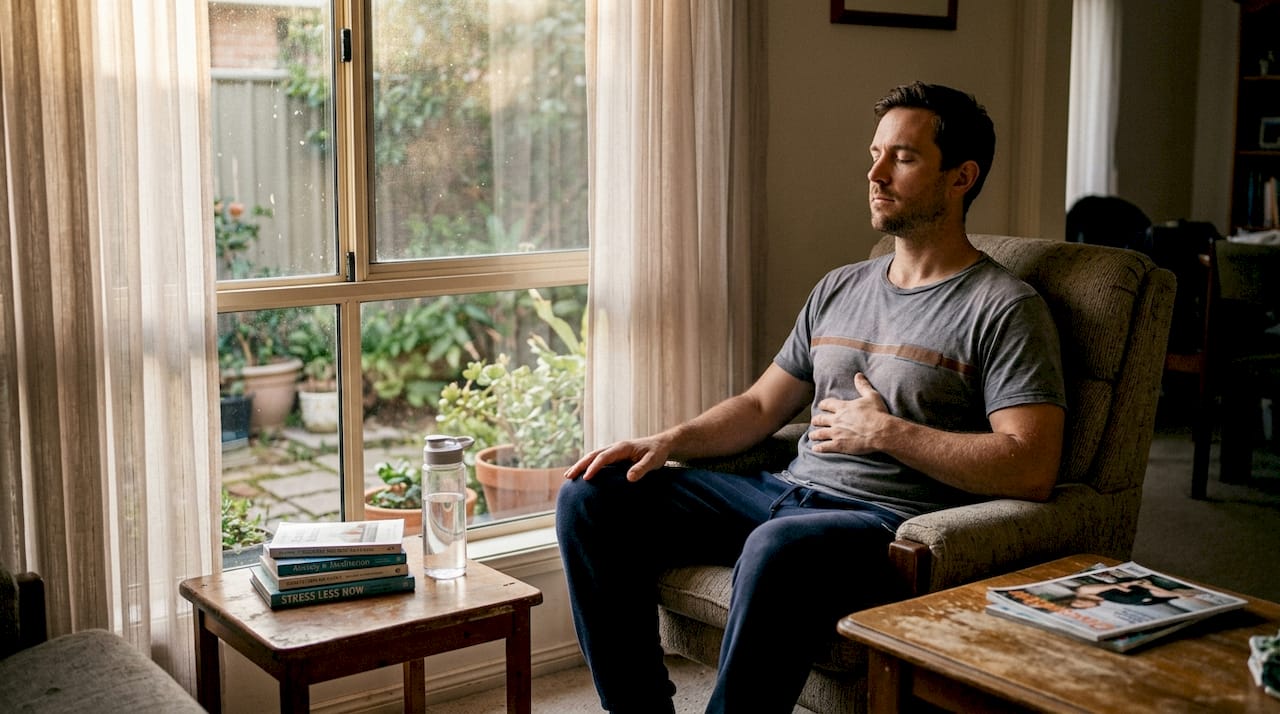
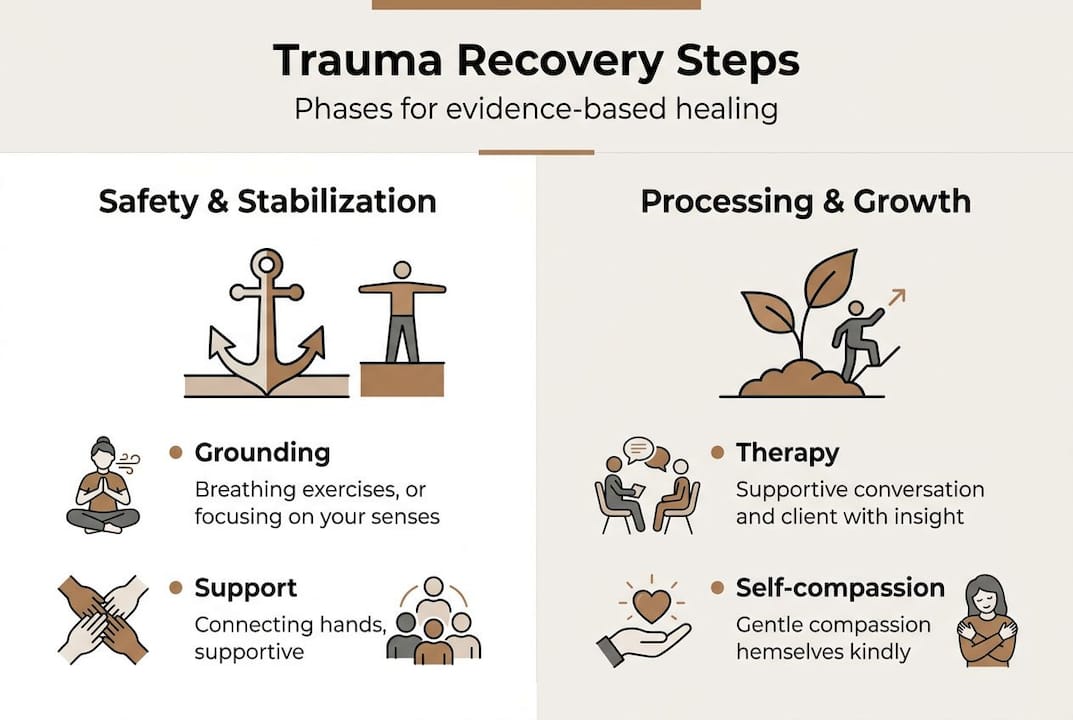
Safety and stabilization are not just a warm-up. They are the work. This phase involves learning to regulate your emotions, building coping tools, and identifying people in your life who feel safe to lean on.
Choosing the right therapist matters enormously. Therapeutic alliance and trust are crucial for effective CPTSD recovery. The relationship itself is part of the medicine. Look for someone who practices trauma therapy with genuine empathy and who understands that healing is relational, not just technical.
When interviewing potential therapists in Kansas City, consider asking:
- What trauma-informed modalities do you use (EMDR, IFS, somatic therapy)?
- How do you approach safety and stabilization before trauma processing?
- How do you handle ruptures or moments when I feel misunderstood?
- What does a typical session look like for someone with complex trauma?
- How do you adjust your approach if something is not working?
You also deserve to know that finding a trauma specialist with specific training in CPTSD leads to measurably better outcomes than general therapy. Credentials matter, but so does fit. Trust your gut about whether you feel seen in that room.
The role of presence in healing is something that cannot be overstated. A therapist who is truly with you, not just technically skilled, changes everything.
Pro Tip: Before your first session, write down three things you most want your therapist to understand about your experience. This small act helps you communicate your needs clearly and sets a tone of self-advocacy from the start.
Evidence-based trauma therapies: What works and why
Once safety is established, you can explore which therapies are most effective for your unique needs. The landscape of trauma treatment has grown significantly, and the evidence is strong for several approaches.
TF-CBT, PE, CPT, EMDR, and DBT are all effective for PTSD and CPTSD with large effect sizes. Here is a brief overview of each:
| Therapy | Full name | Best suited for |
|---|---|---|
| TF-CBT | Trauma-Focused Cognitive Behavioral Therapy | Childhood trauma, adolescents |
| PE | Prolonged Exposure | Single-event PTSD |
| CPT | Cognitive Processing Therapy | Shame, guilt, distorted beliefs |
| EMDR | Eye Movement Desensitization and Reprocessing | All trauma types, body-based |
| DBT | Dialectical Behavior Therapy | Emotional dysregulation, BPD |
| NET | Narrative Exposure Therapy | Refugee, repeated trauma histories |
EMDR is particularly powerful for people whose trauma lives in the body as much as the mind. It uses bilateral stimulation (often eye movements) to help the brain reprocess stuck memories. Many clients describe it as finally being able to put something down that they have been carrying for years.
- Start with stabilization and grounding skills
- Identify target memories or beliefs with your therapist
- Process using your chosen modality (EMDR, IFS, somatic work)
- Integrate new understanding into your daily sense of self
- Revisit and reinforce as needed over time
APA guidelines recommend individualized, trauma-informed care because no single therapy works for everyone. Comorbidities like depression, dissociation, or borderline personality disorder (BPD) may require adapted strategies. This is why a phase-based approach, as supported by phase-based therapy research, is so valuable for complex presentations.
You can explore evidence-based tips and learn more about processing complex trauma through a step-by-step lens when you are ready to go deeper.
Pro Tip: If you have experienced childhood trauma or have a history of dissociation, ask your therapist specifically about phase-based models. Jumping straight into memory processing without stabilization can feel destabilizing rather than healing.
Common challenges and how to measure healing progress
Knowing what to expect during therapy will help you prepare for setbacks and recognize signs of true progress. Healing from trauma is rarely a smooth upward climb. Most people experience plateaus, unexpected emotional surges, and moments of doubt.
About 30% of individuals may not respond fully to first-line trauma therapies. This is not a reflection of your effort or worth. It simply means that healing sometimes requires trying more than one approach, adjusting the pace, or adding additional supports.
Common challenges you might encounter include:
- Emotional flooding: Feeling overwhelmed during or after sessions
- Dissociation: Spacing out or feeling unreal, especially during processing
- Slow progress: Weeks that feel like nothing is shifting
- Avoidance: Canceling sessions or numbing out between appointments
- Grief: Mourning the life or relationships that trauma took from you
Healing is not the absence of pain. It is the growing capacity to be with yourself through it.
Signs that healing is actually happening include: sleeping more soundly, noticing your reactions before acting on them, feeling moments of genuine ease, reconnecting with things you used to enjoy, and trusting yourself a little more each week.
To track your progress, try keeping a simple journal where you note your mood, any triggers, and one moment of regulation or connection each day. Share this with your therapist so you can adjust together. Trauma therapy outcomes are generally stable at one year, except for anxiety and dissociation, which may need ongoing attention.
If progress stalls, revisit your stabilization skills, talk honestly with your therapist, or explore whether an additional support, such as a trauma support group or body-based practice, might help. You can find more guidance on troubleshooting trauma recovery and returning to a safe space for healing when things feel stuck.
Self-compassion is not optional here. It is the soil that healing grows in.
What most guides miss about trauma healing
Most step-by-step guides focus on techniques, and techniques matter. But they often miss something quieter and more essential: healing happens inside a relationship. Not just the therapeutic relationship, though that is sacred. The relationship you are slowly rebuilding with yourself.
Rebuilding trust in yourself, your perceptions, and your body is at least as important as reducing symptoms. Symptom relief without self-trust leaves you vulnerable. Real recovery means coming home to yourself, not just feeling better on a checklist.
Healing is also not linear. You will have weeks that feel like regression. You will hit plateaus that last longer than feels fair. And then, often when you least expect it, something shifts. A moment of genuine laughter. A boundary you hold without guilt. A morning that feels soft instead of heavy.
Kansas City has a growing community of trauma-informed therapists and resources that understand this. Prioritize fit and compassion as much as credentials when choosing your support. Relational healing in therapy is not a soft extra. It is often the most powerful variable in the room. Your healing deserves both science and heart.
Compassionate support for your trauma healing journey
If you are ready to take the next step, you do not have to figure this out alone. At Simple Empathy KC, we offer trauma-informed therapy rooted in presence, compassion, and evidence-based care. Our Kansas City therapists specialize in EMDR, Internal Family Systems, and somatic approaches designed to meet you exactly where you are.

Explore our trauma-informed therapy options to find the right fit for your healing journey. You can also browse additional recovery tips to support your work between sessions. Your story is sacred here. We would be honored to walk alongside you.
Frequently asked questions
What is the best evidence-based therapy for trauma?
TF-CBT, EMDR, and DBT-PTSD are among the most effective therapies for PTSD and CPTSD, but the best choice depends on your specific history, symptoms, and what feels manageable for your nervous system right now.
How long does trauma healing take?
Trauma recovery is not linear, and many people notice meaningful shifts within months, though deep healing often takes longer. Recovery outcomes are generally stable at one year, but the timeline varies widely depending on trauma type and severity.
Can I heal from trauma without therapy?
Self-help practices like journaling, movement, and community support can be meaningful companions to healing, but professional support leads to significantly better outcomes, especially for complex trauma where the nervous system needs skilled, relational guidance.
How do I find a trauma specialist in Kansas City?
Search for certified EMDR or trauma-informed therapists through Psychology Today or reach out to local practices like Simple Empathy KC. Certified specialists in trauma-focused modalities are recommended for CPTSD and complex presentations.