
TL;DR:
- Healing complex trauma requires careful preparation, stabilization, and building safety first.
- Processing trauma involves gradual approaches tailored to individual needs, with emphasis on safety and support.
- Integration focuses on reconnecting with life, relationships, and self after trauma processing.
Living with complex trauma can feel like carrying something invisible that weighs everything down. You might notice emotional overwhelm that comes out of nowhere, anxiety that never fully quiets, or a deep difficulty trusting the people around you. These aren’t character flaws. They are your nervous system’s honest response to experiences that were too much, too soon, or too often. The good news is that healing is not only possible, it follows a clear, research-supported path. In this guide, we walk through a phased, evidence-based approach to processing complex trauma so you can move from surviving to truly coming home to yourself.
Table of Contents
- Preparation: What you need before starting trauma work
- Step 1: Building stability and safety
- Step 2: Processing the trauma — methods and what to expect
- Step 3: Integration, reconnection, and rebuilding life
- A therapist’s perspective: What most guides miss about trauma recovery
- Next steps: Get trauma-informed support in Kansas City
- Frequently asked questions
Key Takeaways
| Point | Details |
|---|---|
| Trauma recovery is phased | Deep, lasting healing follows stages: stabilization, processing, then integration. |
| Safety comes first | Building emotional and physical safety must always precede trauma processing. |
| Evidence-based methods work | Proven therapies such as EMDR and CPT can yield significant symptom relief. |
| Therapeutic alliance matters | Empathy and trust with your therapist are as important as techniques. |
| Go at your own pace | Progress is personal and gradual—breaking the process down reduces overwhelm. |
Preparation: What you need before starting trauma work
Now that you know change is possible, let’s look at what you should prepare before diving into trauma work.
Starting trauma therapy without preparation is a bit like trying to run a marathon without any training. Your body and mind need a foundation first. Trauma-informed care principles emphasize that safety is never optional. It is the starting point for everything.
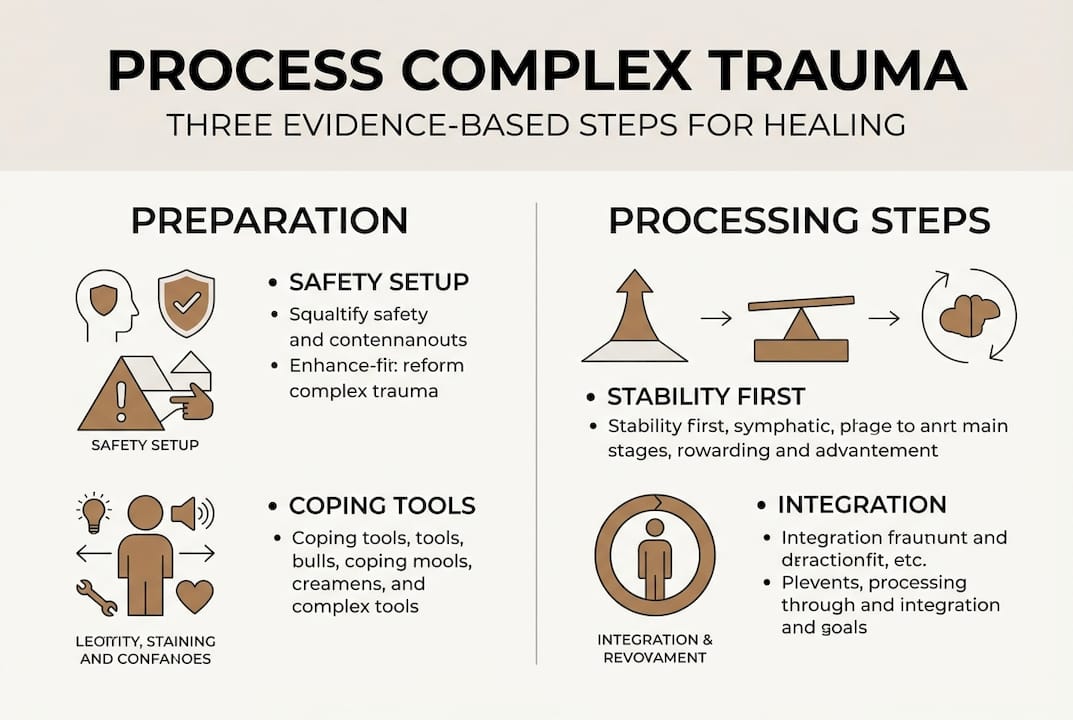
The phased approach to trauma begins with Stage 1: Safety and Stabilization. This means building emotion regulation skills, grounding practices, and coping plans before you ever touch the trauma itself. Research also shows that childhood trauma treatment tends to show lower initial treatment effects compared to single-incident trauma, which is exactly why stabilization must come first.
Before beginning deeper work, check in with yourself using this readiness framework:
| Area | What to look for |
|---|---|
| Support system | At least one trusted person you can reach out to |
| Coping skills | Basic grounding or breathing techniques |
| Living environment | Relative safety and stability at home |
| Therapist fit | Someone trained in trauma-informed care |
| Emotional regulation | Ability to manage distress without crisis |
Some signs that it may be wise to pause or seek additional support before processing:
- Active suicidal thoughts or self-harm behaviors
- Ongoing abuse or unsafe living situation
- Severe dissociation that disrupts daily functioning
- No stable coping skills in place yet
- Substance use that is not yet being addressed
Thinking about creating safe spaces inside and outside of therapy is part of this stage. Your nervous system is sacred, and it deserves to feel held before it is asked to do hard work.
Pro Tip: Going slowly is not weakness. Rushing trauma processing can actually worsen symptoms, increase dissociation, and make healing take longer. Slower, steadier work builds lasting change.
Step 1: Building stability and safety
Once you have your supports in place, begin laying the foundation with stability and safety.
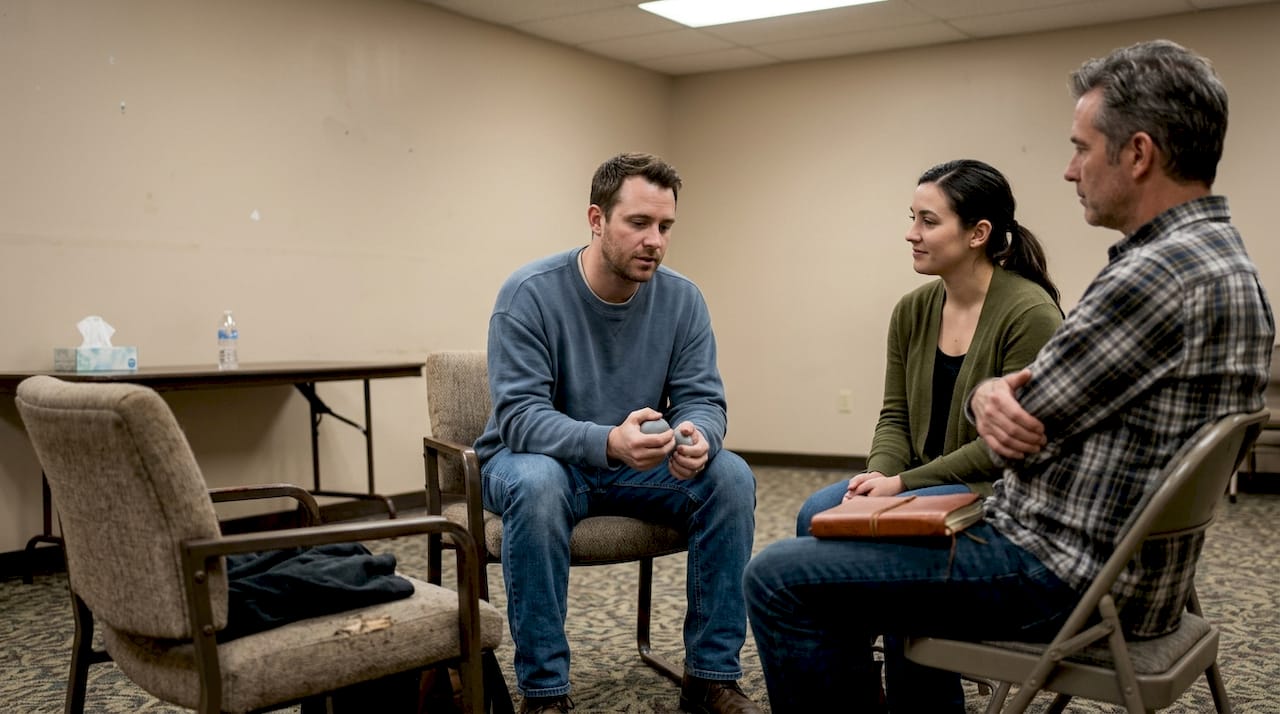
Emotional safety is not just a nice idea. It is what makes healing neurologically possible. When your nervous system feels safe, it can begin to process rather than just protect. Empathy in healing plays a direct role here. The relationship between you and your therapist is one of the most powerful tools in the room.
Research confirms that therapeutic alliance and rupture repair are crucial for safety and emotional regulation, especially in complex cases. This means that how your therapist shows up for you matters just as much as the techniques they use.
Skills to focus on during this stage:
- Grounding techniques: Orienting to the present moment through your senses
- Mindfulness: Noticing thoughts and feelings without being swept away by them
- Emotion regulation: Naming, tolerating, and gently shifting emotional states
- Resourcing: Calling up inner or outer sources of calm and strength
- Safe relationships: Building trust with your therapist and select people in your life
“Without safety, trauma work can retraumatize or overwhelm. Never rush this phase.”
SAMHSA’s trauma-informed principles identify safety, trust, collaboration, and empowerment as essential across all trauma therapies. These are not extras. They are the core.
Collaborative goal-setting with your therapist also matters deeply here. Healing should feel like something you are doing with your therapist, not something being done to you. Finding the right therapist who truly sees you and works at your pace is one of the most important decisions you will make.
You are ready to move to the next step when you can tolerate distress without becoming overwhelmed, have at least one reliable coping skill, and feel a basic sense of trust with your therapist. That is enough to begin.
Step 2: Processing the trauma — methods and what to expect
With safety as your base, you can move into the heart of healing: facing and working through your trauma in manageable pieces.
This stage is where the actual trauma processing happens. It does not mean reliving everything at once. It means gently approaching painful memories, beliefs, and feelings in a way your nervous system can handle. Evidence-based trauma therapies show large effect sizes, with up to 84 to 90% remission for single-trauma presentations after just a few sessions.
Here is how trauma is typically processed in therapy:
- Identify triggers and understand how they connect to past experiences
- Approach the memory at a tolerable pace, with your therapist guiding the process
- Process the emotion and body sensation tied to the memory
- Challenge distorted beliefs about yourself that formed during trauma
- Build self-compassion as you integrate a new, truer story about who you are
Different approaches work for different people. Here is a brief comparison:
| Modality | Focus | Best for |
|---|---|---|
| EMDR | Reprocessing memories through bilateral stimulation | Single or complex trauma with vivid memories |
| CPT (Cognitive Processing Therapy) | Changing unhelpful beliefs about the trauma | Guilt, shame, and distorted thinking |
| PE (Prolonged Exposure) | Gradual approach to avoided memories and situations | Avoidance-heavy PTSD presentations |
| TF-CBT (Trauma-Focused CBT) | Thoughts, feelings, and behaviors | Childhood trauma, often used with adolescents |
Phase-based, personalized approaches are especially recommended for complex PTSD (C-PTSD), which is recognized under ICD-11 as its own diagnosis. For relational and identity wounds, integration of psychodynamic elements and skills training is often part of the work.
Sessions during this phase can feel emotionally intense. Some days you may leave feeling lighter. Other days you may feel more tired or tender. Both are normal. Explore trauma healing tips to support yourself between sessions. You can also review Kansas City trauma therapy options to find the right fit.
Pro Tip: It is completely normal to need a break between phases or even between modalities. Healing is not linear. Pausing to stabilize again is not failure. It is wisdom.
Watch for signs to slow down: intense dissociation, feeling completely shut down, or a sudden spike in crisis-level symptoms. These are signals to communicate with your therapist, not reasons to stop entirely.
Step 3: Integration, reconnection, and rebuilding life
After processing, the final step is weaving your new sense of self and safety back into daily life.
Processing the trauma is not the finish line. Stage 3 of trauma recovery focuses on relationships, routine, meaning, and identity. This is where you begin to live differently, not just feel differently.
Practices that support reconnection and integration:
- Mindfulness and body awareness: Staying present in your body as it learns safety
- Peer support or group therapy: Healing in community reduces shame and isolation
- Healthy relationships: Practicing new patterns of trust and communication
- Creative expression: Art, writing, or movement as ways to process and celebrate
- Structure and routine: Predictability helps your nervous system settle
Therapies that incorporate body-focused approaches are especially valuable during this phase for people dealing with disturbances in self-organization, which is common with complex trauma. Somatic work helps you feel the change in your body, not just understand it in your mind. Explore body-based approaches offered by trauma-informed practitioners who work with the whole person.
Community resources also matter. Holistic trauma recovery approaches remind us that healing happens in relationship, in nature, in creativity, and in meaning-making, not only in a therapy office. Look into Kansas City therapy services that can support this broader integration.
Pro Tip: Expect some discomfort as life stabilizes. When you are no longer in survival mode, new feelings and challenges can surface. This is not regression. It is your nervous system adjusting to peace.
Celebrate your progress. Notice when you respond differently to a trigger. Notice when you choose yourself. These moments are evidence of real, lasting change.
A therapist’s perspective: What most guides miss about trauma recovery
Beyond techniques and phases, here is what expert clinicians in Kansas City wish every trauma survivor could know.
Most step-by-step guides make trauma recovery sound more linear than it actually is. In real clinical work, the path is rarely straight. Sometimes a client stabilizes beautifully, then a life event pulls them back to Stage 1. That is not failure. That is the nature of complex trauma.
For people with attachment wounds, dissociation, or conditions like borderline personality disorder (BPD), standard phase-based work needs careful adaptation. Research on edge cases with dissociation and BPD shows that phased skills-building and adjunct supports are critical before any trauma processing begins. Skipping this can cause more harm than good.
What seasoned clinicians also know is that empathy heals trauma in ways that no protocol alone can replicate. Being truly witnessed by another person, without judgment, is itself therapeutic. The relationship is the medicine.
Finally, real-world support matters enormously. Therapy is one hour a week. The other 167 hours are your life. Building community, meaning, and even small moments of joy are not extras. They are part of healing.
Next steps: Get trauma-informed support in Kansas City
If you are ready to reclaim your life with skilled guidance, here is where you can take your next step.
You do not have to carry this alone. Compassionate, expert support is available right here in Kansas City, with therapists who understand the full weight of complex trauma and know how to walk alongside you at a pace that feels safe.

At Simple Empathy Kansas City, we offer specialized trauma therapy rooted in evidence-based approaches like EMDR, IFS, and somatic work. Whether you are just beginning to explore healing or are ready to go deeper, our team is here. Learn more about our therapy services in Kansas City or read about how we build safe healing environments for every client. Healing is possible. You deserve to come home to yourself.
Frequently asked questions
What is the difference between complex trauma and PTSD?
Complex trauma involves repeated or prolonged harm, often in childhood or close relationships, leading to difficulties with identity, emotion, and trust. PTSD typically follows a single traumatic event. C-PTSD is recognized under ICD-11 as a distinct diagnosis requiring its own phased, personalized treatment approach.
How long does it take to process complex trauma?
Healing complex trauma is a gradual process that often takes months or years, not weeks. Stabilization must come first, and the timeline depends on your history, support system, and the pace that feels safe for your nervous system.
Can I process complex trauma on my own?
You can build some coping and stabilization skills independently, but processing the trauma itself is safest with a trained therapist. Therapeutic alliance and empathy are essential ingredients that a trained professional provides in ways self-help cannot fully replicate.
What if trauma therapy makes me feel worse at first?
It is common for symptoms to temporarily intensify as you begin processing. This is why stabilization and pacing are so critical. Talk openly with your therapist and adjust the pace as needed. Feeling worse briefly does not mean therapy is not working.