
TL;DR:
- Therapeutic presence is the deep availability of a therapist emotionally, relationally, and somatically.
- Presence builds safety and trust, essential for healing trauma and repairing relational patterns.
- Matching presence to a client’s needs ensures effective support, with careful pacing and mutual attunement.
Presence and the therapist-client relationship account for nearly 30% of therapy outcomes, compared to just 15% for any specific therapy model. Yet most people search for a therapist by asking, “What method do you use?” rather than “How will you be with me?” That gap matters enormously, especially if you are carrying complex trauma, anxiety, or the quiet ache of not knowing who you are anymore. This article explores what therapeutic presence actually is, what research says it does inside the healing process, and why finding a therapist who can truly be with you may be the most important decision you make on your path back to yourself.
Table of Contents
- What does therapeutic presence really mean?
- How presence shapes safety, trust, and emotion regulation
- Beyond symptom relief: Presence, identity, and relational renewal
- Matching presence to need: Pitfalls, edge cases, and practical steps
- Why presence, not protocol, transforms therapy in the long run
- Trauma-informed therapy in Kansas City: Experience true presence
- Frequently asked questions
Key Takeaways
| Point | Details |
|---|---|
| Presence shapes healing | Therapist presence impacts life outcomes more deeply than any single technique. |
| Alliance drives safety | A strong, present relationship is the foundation for trauma recovery and emotional regulation. |
| Individualized care matters | Matching therapist presence to your needs creates space for lasting identity and relationship change. |
| Repair strengthens growth | Discussing and repairing alliance ruptures builds resilience and deeper trust in therapy. |
What does therapeutic presence really mean?
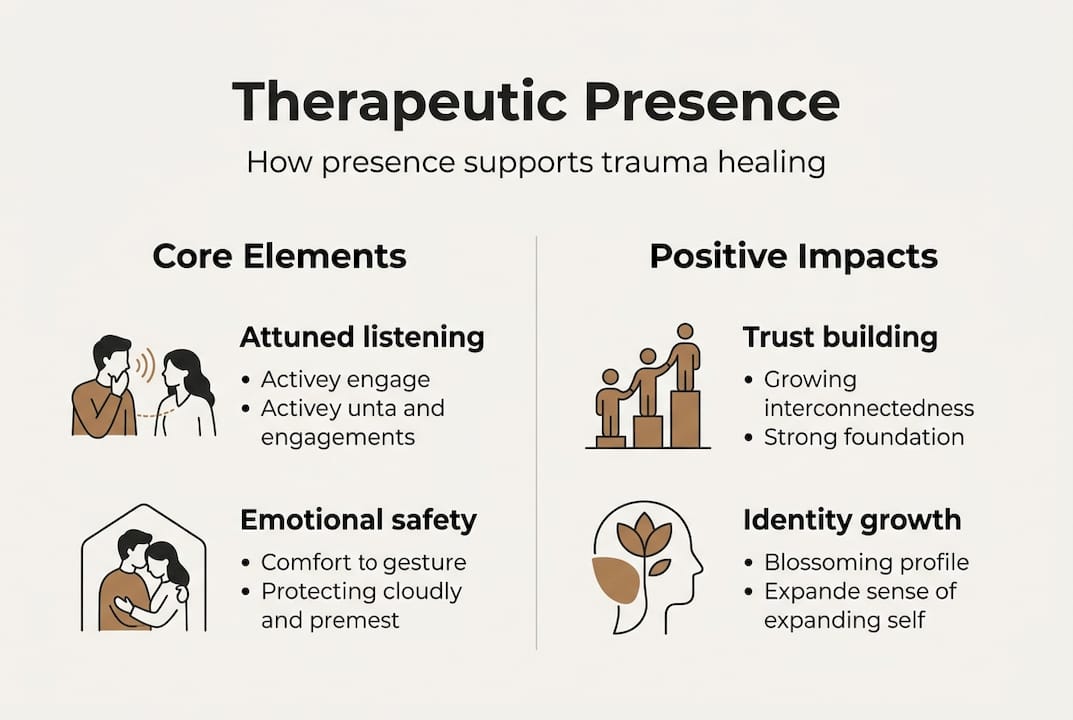
Therapeutic presence is not the same as being warm or friendly. It goes deeper than that. It is the quality of a therapist being fully available to you, not just intellectually but emotionally, somatically, and relationally. When your therapist is truly present, you feel it in your nervous system before you can name it.
In a trauma-informed healing guide, presence is described as the ground from which all healing grows. Without it, even the most sophisticated techniques can feel hollow or even threatening to a nervous system that has learned to stay guarded.
A useful way to understand presence in practice comes from the Presence 5 framework, which breaks it into five concrete actions:
- Prepare with intention: The therapist arrives ready, not distracted or on autopilot.
- Listen intently: Full, non-demanding attention that does not rush toward solutions.
- Agree on what matters: Collaborating with you on what the session should hold.
- Connect with story: Receiving your narrative with curiosity, not clinical distance.
- Explore emotional cues: Noticing the subtle signals your body and voice carry.
- Care for self: A regulated therapist can only offer regulated presence.
Presence also means the therapist is actively curious about your inner world, not just tracking symptoms. For adults navigating complex trauma, anxiety, or identity transitions, this matters because your nervous system is constantly scanning for safety. A present therapist is not just listening to your words. They are attuned to the pauses, the shifts in your breathing, the moment you go quiet. That attunement tells your body it is safe to soften.
Debunking a common myth: presence is not passive. It requires self-regulation, emotional readiness, and the courage to stay close to pain without flinching. That is what makes it so rare, and so powerful.
How presence shapes safety, trust, and emotion regulation
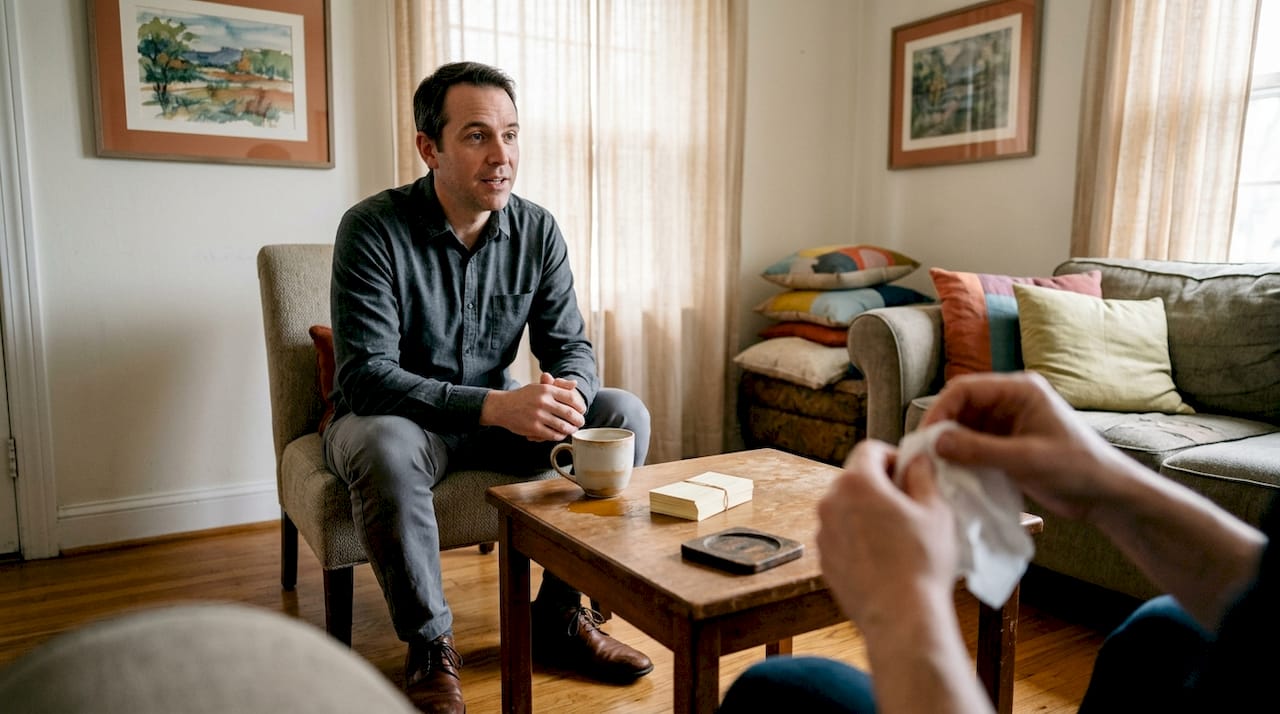
When you sit across from a therapist who is genuinely present, something shifts in the room. The emotional threat level drops. Your nervous system, which may have spent years bracing for judgment or abandonment, begins to register something different: safety.
This is not a metaphor. Therapeutic alliance predicts PTSD recovery with a correlation of r=0.34, which is a meaningful and consistent finding across studies. Alliance is built primarily through presence, not through technique.
| Approach | Alliance focus | Outcome pattern |
|---|---|---|
| Model-first therapy | Technique adherence | Symptom reduction, limited relational repair |
| Presence-focused therapy | Attunement and trust | Deeper safety, sustained emotional growth |
For those with developmental or betrayal trauma, felt safety is not a given. It is earned slowly, through repeated experiences of being seen without consequence. A present therapist creates those experiences, session by session.
Presence also plays a direct role in emotion regulation. When your therapist stays calm and attuned during your most difficult moments, your nervous system co-regulates with theirs. This is one reason working with a presence-oriented therapist can shift patterns that years of self-help strategies could not touch.
Key ways presence supports emotional healing:
- Reduces the shame spiral that often accompanies vulnerability
- Helps you stay inside your window of tolerance instead of flooding or shutting down
- Models that emotions can be held without becoming overwhelming
- Repairs the internal message that your feelings are too much for others
Pro Tip: The right therapist paces presence carefully. Moving too fast, offering too much intensity too soon, can trigger dissociation or overwhelm. Healing is not a race, and a skilled therapist knows how to go slowly with care.
When ruptures happen in the therapeutic relationship, and they do, presence is what makes repair possible. A therapist who can acknowledge a misstep without defensiveness teaches you something profound: relationships can survive difficulty. That lesson lives in the body long after the session ends. You can explore Kansas City therapy services that center this kind of relational care.
Beyond symptom relief: Presence, identity, and relational renewal
Once you feel safe and trust begins to build, something deeper becomes possible. The work moves beyond managing symptoms and into the territory of who you are.
For many people healing from complex trauma, the deepest wounds are not flashbacks or anxiety spikes. They are disturbances in self-organization, sometimes called DSO symptoms: a fragmented sense of identity, difficulty trusting your own perceptions, and relational patterns that keep recreating pain. Relational presence enhances DSO outcomes in ways that model-only approaches simply cannot reach.
“The most transformative moments in therapy rarely happen because of a technique. They happen when a client feels, perhaps for the first time, that another person can hold their full reality without pulling away.” This is the heart of relational healing.
Signs you are doing deeper relational work, not just technique-focused symptom relief:
- You notice old relational patterns showing up in the therapy relationship itself.
- You begin questioning long-held beliefs about who you are or what you deserve.
- Sessions feel emotionally alive, not just informational.
- You carry something from the session into your relationships outside the room.
- You feel both challenged and genuinely held at the same time.
This kind of work, supported by relational healing in therapy, is where identity begins to shift. You start coming home to yourself, not the self that learned to survive, but the one that always existed underneath the armor.
Presence also helps repair your relational skills beyond the therapy room. When you experience being truly witnessed, you begin to recognize that quality in others. You become more able to offer it too. Empathy in trauma recovery grows from the inside out, and it starts with someone being present enough to show you what it feels like.
Matching presence to need: Pitfalls, edge cases, and practical steps
Presence is powerful. But it is not one-size-fits-all, and getting the wrong kind can actually set healing back.
For someone with severe dissociation or early-stage trauma processing, too much emotional intensity from a therapist can feel overwhelming rather than safe. Titrating presence is vital, and skilled trauma-informed therapists know how to adjust their level of attunement based on where you are in any given moment.
Common pitfalls when presence is mismatched:
- Feeling like the therapist is too intense or emotionally close too quickly
- Blanking out or going numb during sessions that feel emotionally pressured
- Feeling rushed toward insight before you feel safe
- Sensing the therapist’s discomfort with your pain, which can retrigger shame
| Strategy | Description | Best for |
|---|---|---|
| Titrated presence | Gradual attunement, paced to your window of tolerance | Early trauma work, dissociation, high anxiety |
| Full relational presence | Deep emotional attunement and co-regulation | Established alliance, identity and relational work |
| Collaborative presence | Shared agenda-setting and transparent process | Clients who need autonomy and control in healing |
Pro Tip: If your therapist’s presence ever feels off, naming it is the first step in repair. Saying “I felt a little rushed today” or “Something felt different this session” is not a complaint. It is the work itself.
When looking for a trauma-informed, presence-oriented therapist, consider asking: How do you handle moments when I feel overwhelmed in session? How do you approach ruptures in our relationship? What does your own self-care look like? These questions reveal far more than a list of certifications. Finding your therapy match is about fit, not just credentials. You can also explore evidence-based trauma tips to help you prepare for that search.
Why presence, not protocol, transforms therapy in the long run
Here is something the mental health field does not say loudly enough: the model your therapist uses matters far less than who your therapist is when they are with you. Conventional guidance pushes people toward evidence-based protocols, and those tools have real value. But research and lived experience both point to the same truth. Presence drives lasting change, especially with complex trauma.
We have seen this from inside the therapy room. Clients who have tried multiple approaches without lasting relief often describe the same turning point: not a new technique, but a moment when they finally felt truly held. That is presence doing its work.
The hard truth is this: without presence, even the most sophisticated tools are hollow. With presence, even a simple, honest conversation can shift something that has been frozen for decades. If you are searching for therapy, we encourage you to trust your nervous system’s read on a therapist. Does the room feel safe? Do you feel seen, not managed? That felt sense is data. Therapist presence in action looks like a space where your whole story is welcome, not just the parts that fit neatly into a treatment plan.
Trauma-informed therapy in Kansas City: Experience true presence
If this article has resonated with you, you already know something important: you are looking for more than a method. You are looking for someone who can truly be with you.

At Simple Empathy KC, therapist presence and the relational bond are at the center of everything we do. Our team specializes in trauma-informed care for complex trauma, anxiety, and identity transitions, using approaches like EMDR, Internal Family Systems, and somatic therapy, all grounded in genuine attunement. Whether you are just beginning to explore healing or have been on this path for a while, we offer a safe space for healing where your story is honored. Explore our Kansas City therapy services and take the next step toward feeling truly seen.
Frequently asked questions
What is the difference between therapist presence and regular conversation?
Therapeutic presence means attuning deeply to you with intention, safety, and professional wisdom, going far beyond ordinary listening or friendly exchange.
Does the type of therapy matter more than the therapist’s presence?
Therapist presence and the relationship explain nearly twice the outcome variance of any specific therapy approach, especially when complex trauma is involved.
How can I tell if my therapist’s presence is the right fit?
You feel safer, more understood, and both calm and encouraged to grow. If you feel rushed or emotionally distant, that is worth naming. Alliance repair is crucial in complex trauma work, and a good therapist will welcome that conversation.
Can therapist presence help if I have felt unsafe with past providers?
Yes. Therapy grounded in presence is specifically designed to rebuild trust and safety after earlier ruptures, moving at a pace your nervous system can actually tolerate.
Recommended
- Simple Empathy | Therapy Done Differently in Kansas City
- Empathy in healing: How trauma therapy transforms recovery
- How to create a safe space for healing: trauma-informed guide
- Top trauma healing tips: 7 evidence-based paths to recovery
- Featured Mindfulness Course | Mindful Self Compassion in Support of Psychedelic-Assisted Therapy